


Is sugar addictive? Does it cause diabetes or cancer? Discover the truth behind 7 common sugar myths, including fruit, weight loss, kids and added sugar.
Sugar is everywhere.
It is in sweets, desserts, soft drinks and chocolates. But it can also appear in breakfast cereals, flavored yogurt, sauces, packaged snacks and sweetened beverages.
And then the internet makes things even more confusing.
You may have heard that sugar is as addictive as drugs, that sugar makes children hyperactive, that eating sugar causes diabetes, or that sugar literally feeds cancer.
Some of these statements contain a small piece of truth.
Others take scientific findings far beyond what the evidence actually shows.
The bigger problem is that treating all sugar as one thing creates unnecessary fear. Whole fruit, milk, honey, table sugar and added sugar in ultra-processed foods are not nutritionally identical.
At the same time, that does not mean excessive sugar is harmless.
The World Health Organization recommends limiting free sugars to less than 10% of total daily energy intake, with a further reduction to below 5% offering additional health benefits. On a 2,000-calorie diet, 10% equals about 50 grams of free sugar, while 5% is about 25 grams.
So what’s the real story?
Let’s separate the facts from the myths.
In This Article:-
Is Sugar Bad for You?
Sugar is not inherently toxic, but regularly consuming excessive amounts of added or free sugar can contribute to excess calorie intake, weight gain, obesity, tooth decay and increased risk of several chronic health problems. Naturally occurring sugars in whole foods such as whole fruit are not considered equivalent to added sugars in sweets and sugary drinks.
The important word is excessive.
Your body uses glucose as an energy source. The problem arises when sugar-rich foods and beverages become a major part of your everyday diet.
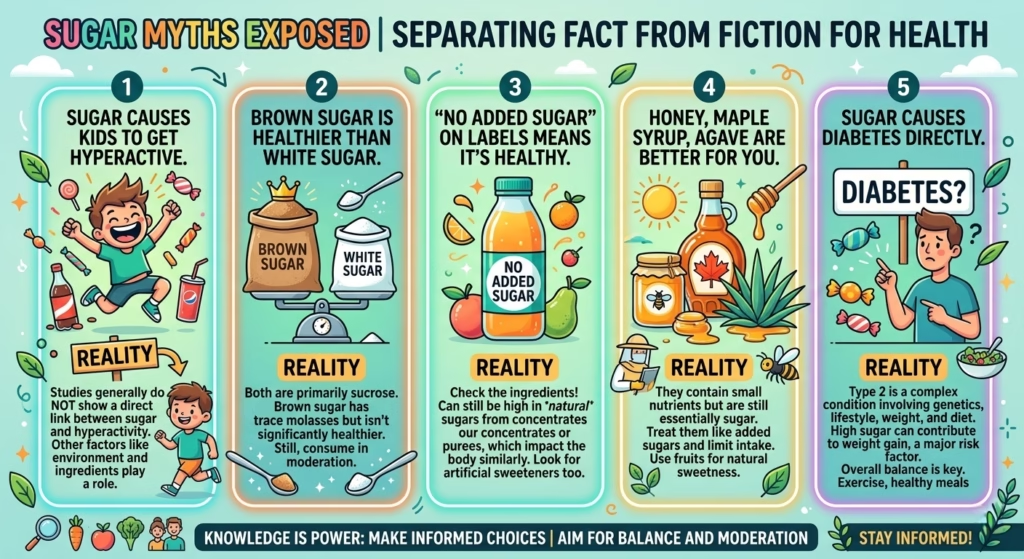
Sugar Myths-Myth 1: “Sugar Is as Addictive as Drugs”
The craving is real. But calling sugar a drug is an oversimplification. Its one of the most common sugar myths.
Have you ever eaten one piece of chocolate and immediately wanted another?
Or opened a packet of cookies and found yourself reaching for “just one more”?
There is a biological reason sweet foods can be highly rewarding.
Sugar and sweet foods can activate brain reward pathways. Recent research continues to investigate the relationship between sweet foods, reward, craving and compulsive eating.
Animal research has also demonstrated addiction-like behaviors under certain experimental conditions.
But here’s the important distinction:
Evidence of reward and craving does not automatically mean sugar is clinically equivalent to an addictive drug.
Research in humans is much more complicated.
A review examining the so-called sugar-addiction model found that direct evidence for substance-dependence symptoms caused specifically by sugar in humans remains limited.
So instead of saying:
“Sugar is a drug.”
A more accurate statement is:
Highly palatable, sugar-rich foods can trigger reward and cravings, and some people may struggle to control their intake.
That is a meaningful problem without exaggerating the science.
What should you do?
If you constantly crave sweets, don’t automatically label yourself “sugar addicted.”
Look at the bigger picture.
How often are you drinking sugary beverages?
How frequently are you eating desserts?
Are highly processed sweet foods replacing protein, vegetables, fruit, whole grains and other nutrient-rich foods?
Those questions are much more useful.
Sugar Myths-Myth 2: “Sugar Makes Children Hyperactive”
The famous “sugar rush” may not be what you think. Its also one of the most common sugar myths.
Picture a child’s birthday party.
There is cake.
Candy.
Ice cream.
Soft drinks.
Then suddenly the children are running around, laughing and shouting.
Parents naturally think:
“The sugar made them hyperactive.”
But controlled research doesn’t support that simple explanation.
A meta-analysis published in JAMA examined 23 studies from 16 reports and found that sugar did not significantly affect children’s behavior or cognitive performance. The researchers found that the confidence intervals for the measured effects included zero.
So why does the sugar-rush belief remain so strong?
Because sugary foods are frequently consumed during exciting events.
Birthdays, holidays, parties and celebrations already create an environment in which children are stimulated and excited.
The food may simply be getting the blame.
Does this mean children should eat unlimited sugar?
Absolutely not.
Sugar may not be responsible for hyperactivity, but excessive added sugar can still contribute to poor diet quality, excess calorie intake and dental problems.
WHO specifically recommends limiting free sugars throughout childhood and adulthood.
The lesson isn’t “sugar doesn’t matter.”
It’s:
Don’t blame sugar for every energetic behavior while ignoring the child’s overall diet.
Sugar Myths-Myth 3: “Eating Sugar Causes Diabetes”
This is one of the most common sugar myths — and one of the most misleading. Its also one of the most common sugar myths.
The reasoning seems simple:
Sugar increases blood glucose.
Diabetes involves high blood glucose.
Therefore, sugar causes diabetes.
But human metabolism doesn’t work that simply.
Type 1 diabetes is different
Type 1 diabetes is an autoimmune disease in which the immune system destroys insulin-producing beta cells.
Eating sweets does not simply cause type 1 diabetes.
Type 2 diabetes is more complicated
Type 2 diabetes develops through multiple interacting factors.
These can include:
- Genetics
- Excess body weight
- Physical inactivity
- Aging
- Insulin resistance
- Overall dietary pattern
- Other metabolic and environmental factors
However, this does not mean sugar consumption is irrelevant.
The CDC notes that excessive added sugar can contribute to health problems including weight gain, obesity and type 2 diabetes.
Sugary drinks deserve particular attention.
A 2024 umbrella review covering 47 meta-analyses and more than 22 million people found convincing evidence of associations between sugar-sweetened beverage consumption and type 2 diabetes, cardiovascular disease and other adverse outcomes.
So the accurate statement is:
Sugar isn’t the single direct cause of diabetes, but consistently consuming large amounts of added sugar—particularly through sugary drinks—can contribute to metabolic risk.
Sugar Myths-Myth 4: “Fruit Is Bad Because It Contains Sugar”
This myth has turned a healthy food into a villain. Its also one of the most common sugar myths.
An apple contains sugar.
So does a banana.
An orange contains sugar too.
But saying “fruit contains sugar, therefore fruit is unhealthy” ignores everything else inside the fruit.
Whole fruits contain:
- Fiber
- Water
- Vitamins
- Minerals
- Plant compounds
- Naturally occurring sugars
The food matrix matters.
This is why naturally occurring sugar in whole fruit should not automatically be treated the same as added sugar in candy or soft drinks.
WHO’s current carbohydrate guidance emphasizes carbohydrate quality, including dietary fiber and food sources such as fruits and vegetables.
What about weight loss?
You generally don’t need to eliminate whole fruit simply because you are trying to lose weight.
Instead, look first at calorie-dense foods and beverages high in added sugar.
For example:
Whole orange: sugar + fiber + water + micronutrients.
Sugary soft drink: sugar + calories, with little nutritional value.
They are not nutritionally interchangeable.
What about fruit juice?
This is where things become different.
Juice can contain substantial amounts of sugar while providing less fiber than whole fruit.
WHO classifies sugars naturally present in fruit juice and fruit juice concentrates as free sugars.
So if you’re choosing between an apple and apple-flavored sugary drink, the whole fruit is generally the better choice.
Sugar Myths-Myth 5: “All Sugar Is Basically the Same”
The word “sugar” hides an important nutritional difference. Its one of the most common sugar myths.
When people say “sugar,” they may be talking about completely different sources.
Naturally occurring sugars
These occur naturally in foods such as:
- Whole fruits
- Milk
- Some vegetables
Added sugars
These are added during manufacturing, cooking or preparation.
Examples include:
- Table sugar
- Syrups
- Honey when added as a sweetener
- High-fructose corn syrup
- Molasses
- Other caloric sweeteners
The CDC specifically distinguishes added sugars from naturally occurring sugars in fruits, vegetables and milk.
This distinction is critical.
A whole apple isn’t nutritionally equivalent to a candy bar simply because both contain sugar.
The bigger problem: sugar-rich foods can be easy to overconsume
Foods and drinks high in added sugar can deliver substantial calories without making you feel as satisfied as a more nutrient-dense meal.
That is one reason health organizations focus on reducing added or free sugar rather than demanding that people eliminate every carbohydrate.
Sugar Myths-Myth 6: “Sugar Feeds Cancer, So Cancer Patients Should Stop Eating Sugar”
This claim sounds logical. Cancer biology is much more complicated.
Cancer cells often consume large amounts of glucose.
That fact is real.
But here’s where the internet often makes a huge leap:
Cancer cells use glucose → therefore eating sugar feeds cancer → therefore eliminating sugar will starve cancer.
That conclusion has not been established.
The National Cancer Institute states that although cancer cells consume more glucose than normal cells, studies have not shown that eating sugar makes cancer worse or that stopping sugar causes cancer to shrink or disappear.
Why?
Because healthy cells also need glucose.
And the body has ways of maintaining blood glucose even when dietary carbohydrate is dramatically restricted.
Cancer cells also require other nutrients, including amino acids and fats.
But there is an important warning
This does not mean a high-sugar diet is irrelevant to cancer.
Excessive sugar consumption can contribute to excess calorie intake and weight gain.
Obesity is associated with increased risk of several cancers.
There is also ongoing research into how specific dietary sugars, including fructose, may influence cancer biology. A 2025 NIH-highlighted study found a mechanism in which fructose was converted by the liver into fats that certain cancer cells could use in laboratory and animal models. This is interesting research, but it does not establish that eating normal amounts of dietary sugar directly causes cancer in humans.
So don’t fall for the simplistic message:
“Sugar feeds cancer, so cancer patients must eliminate carbohydrates.”
Cancer nutrition is individualized, and during treatment some patients may actually need additional calories and protein to maintain strength and body weight.
Sugar Myths-Myth 7: “You Need to Quit Sugar Completely to Be Healthy”
This is where healthy eating can become unnecessarily extreme.
You don’t have to declare war on every sweet food.
A healthy diet isn’t built around perfection.
It is built around patterns.
If most of your diet consists of vegetables, fruits, legumes, whole grains, nuts, seeds, protein-rich foods and minimally processed foods, an occasional dessert doesn’t suddenly erase your healthy habits.
The bigger concern is habitual high intake of added sugar.
WHO recommends keeping free sugar below 10% of total energy intake and suggests going below 5% for additional benefits.
The American Heart Association uses an even stricter target for added sugars: no more than 6% of daily calories, which translates to about 25 grams (6 teaspoons) per day for most women and 36 grams (9 teaspoons) for men.
These are population-level recommendations, not necessarily individualized medical prescriptions.
The Sugar Source You Should Watch First: Sugary Drinks
If you want one simple place to start, look at what you’re drinking.
Sugary drinks include:
- Soft drinks
- Sweetened fruit drinks
- Energy drinks
- Sports drinks
- Sweetened tea
- Sweetened coffee
- Flavored sugary beverages
The CDC identifies sugary drinks as a leading source of added sugars and notes their association with weight gain, obesity, type 2 diabetes, cardiovascular disease, tooth decay and other health problems.
The numbers can add up quickly.
The American Heart Association notes that a typical 12-ounce can of regular soda contains about 42 grams of added sugar, equivalent to roughly 10 teaspoons.
That’s already more than the AHA’s recommended daily added-sugar limit for most women.
And you may drink it in just a few minutes.
How to Reduce Sugar Without Giving Up Everything You Love
You don’t need a dramatic diet overhaul.
Try these practical changes.
1. Replace sugary drinks first
Choose water, sparkling water or unsweetened tea instead of regular soda.
2. Eat whole fruit
Don’t eliminate fruit because of its natural sugar.
3. Read the nutrition label
Look specifically for “Added Sugars.”
4. Check serving sizes
A package may contain multiple servings.
Don’t assume the entire package equals one serving.
5. Don’t be fooled by “healthy” sweeteners
Honey, maple syrup, coconut sugar and similar sweeteners are still sources of sugar.
The name may sound healthier, but your body still receives sugar and calories.
6. Reduce gradually
If you put several teaspoons of sugar in tea or coffee, reducing it slowly may be easier than stopping overnight.
7. Keep desserts occasional
You don’t need to ban cake forever.
Make it an occasional food rather than an everyday habit.
How Much Sugar Should You Eat Per Day?
There is no single number that applies perfectly to every person.
WHO recommends reducing free sugars to less than 10% of total daily energy, with less than 5% providing additional health benefits.
For someone consuming 2,000 calories per day:
- 10% = about 200 calories
- That’s approximately 50 grams of free sugar
- 5% = about 100 calories
- That’s approximately 25 grams
The American Heart Association recommends an even lower limit for added sugar:
- Women: about 25 g per day
- Men: about 36 g per day
Remember that these recommendations concern free or added sugars, not the naturally occurring sugars contained in whole foods such as whole fruit.
The Bottom Line: Sugar Isn’t Poison — But Excess Sugar Is Worth Taking Seriously
Sugar has become a nutritional punching bag.
It has been blamed for diabetes, cancer, childhood hyperactivity, obesity and addiction.
But science rarely works in such simple terms.
Here’s what we actually know:
Sugar isn’t simply equivalent to an addictive drug.
Sweet foods can activate reward pathways and produce cravings, but the evidence for a clinical “sugar addiction” diagnosis remains complicated.
Sugar doesn’t appear to cause hyperactivity in children.
Controlled research has not demonstrated a meaningful behavioral or cognitive effect from sugar.
Sugar isn’t the sole cause of diabetes.
Diabetes has multiple causes and risk factors, although excessive added sugar—especially through sugary drinks—can contribute to weight gain and metabolic risk.
Whole fruit doesn’t need to be feared.
The sugar in an apple comes packaged with fiber, water and nutrients.
Sugar doesn’t directly “feed” cancer in the simplistic way social media often claims.
Cancer cells use glucose, but eliminating dietary sugar has not been shown to shrink or eliminate cancer.
But excessive added sugar is not harmless.
High intake can contribute to excess calorie consumption, unhealthy weight gain, tooth decay and other chronic health problems.
The goal isn’t to live a sugar-free life.
The goal is to stop letting added sugar quietly dominate your diet.
Start with sugary drinks.
Read food labels.
Eat whole fruit.
Choose nutrient-dense foods most of the time.
And don’t let internet nutrition myths convince you that an apple and a soft drink are the same thing just because both contain sugar.
The smartest approach isn’t “zero sugar.”
It’s less added sugar, more whole foods and a better overall diet.
Frequently Asked Questions About Sugar
Is sugar bad for you?
Excessive intake of added or free sugar can contribute to excess calorie intake, weight gain, obesity and tooth decay and is associated with several chronic health problems. Sugar naturally present in whole foods such as whole fruit should not automatically be treated the same way as added sugar.
Does sugar cause diabetes?
Sugar alone does not directly cause all forms of diabetes. Type 1 diabetes is an autoimmune condition, while type 2 diabetes results from multiple factors. Excessive intake of added sugar can contribute to weight gain and may increase metabolic risk.
Does sugar make children hyperactive?
Evidence from controlled studies does not show that sugar consistently causes hyperactivity or impaired cognitive performance in children. A meta-analysis of 23 studies found no significant behavioral or cognitive effect.
Is fruit sugar bad for you?
Whole fruit can be part of a healthy diet. Fruit contains naturally occurring sugar along with fiber, water, vitamins, minerals and plant compounds.
Does sugar feed cancer?
Cancer cells use glucose, but there is no evidence that simply eating sugar makes an existing cancer grow or that eliminating sugar causes tumors to shrink.
Should cancer patients avoid sugar completely?
There is no general evidence-based requirement for all cancer patients to follow a completely sugar-free diet. Nutritional needs vary during cancer treatment, and some patients may need additional calories and protein. Major dietary restrictions should be discussed with the treating oncology team or a qualified dietitian.
How much added sugar should I eat?
Recommendations vary. WHO recommends keeping free sugar below 10% of total energy intake and suggests below 5% for additional benefits. The American Heart Association recommends no more than about 25 grams daily for most women and 36 grams for men.
Is honey healthier than sugar?
Honey is still a source of sugar. It may contain small amounts of other compounds, but it should not be considered a reason to consume unlimited amounts of sugar.
Is brown sugar healthier than white sugar?
Brown and white sugar are nutritionally similar as sources of added sugar. Brown sugar may contain some molasses, but the difference is not large enough to make it a health food.
What is the easiest way to reduce sugar?
Start with sugary drinks. Replacing regular soda, sweetened tea, energy drinks and other sugar-sweetened beverages with water or unsweetened drinks can substantially reduce added sugar intake.
Medical Disclaimer
This article is intended for general educational purposes and should not replace individualized medical advice. People with diabetes, cancer, metabolic disorders or other medical conditions should discuss major dietary changes with their doctor or registered dietitian.
Sources:-
- World Health Organization — Guideline: Sugars Intake for Adults and Children
WHO: Guideline on Sugars Intake for Adults and Children - World Health Organization — Healthy Diet: Sugar Recommendations
WHO: Healthy Diet - World Health Organization — Carbohydrate Intake for Adults and Children
WHO: Carbohydrate Intake Guideline - CDC — Get the Facts: Added Sugars
CDC: Added Sugars - CDC — Rethink Your Drink
CDC: Rethink Your Drink - American Heart Association — How Much Sugar Is Too Much?
American Heart Association: How Much Sugar Is Too Much? - Wolraich ML, Wilson DB, White JW. The Effect of Sugar on Behavior or Cognition in Children: A Meta-analysis. JAMA. 1995.
PubMed: Sugar and Children’s Behavior Meta-analysis - National Cancer Institute — Common Cancer Myths and Misconceptions
NCI: Common Cancer Myths and Misconceptions - National Cancer Institute — Nutrition During Cancer Treatment
NCI: Nutrition During Cancer Treatment - Cancer Research UK — Sugar and Cancer: What You Need to Know
Cancer Research UK: Sugar and Cancer - Lane MM, et al. Sugar-Sweetened Beverages and Adverse Human Health Outcomes: An Umbrella Review of Meta-analyses of Observational Studies. Annual Review of Nutrition. 2024.
PubMed: Sugar-Sweetened Beverages and Health Outcomes - Fattore E, et al. Dietary Sugar Consumption and Health: Umbrella Review. BMJ. 2023.
PubMed: Dietary Sugar Consumption and Health Umbrella Review - Skryabin V, et al. Sugar Addiction at the Crossroads of Reward, Metabolism, and Culture. Behavioural Brain Research. 2026.
PubMed: 2026 Review on Sugar Addiction - National Cancer Institute — Fructose Fuels Cancer Growth Indirectly: Lab Study Finds.
NCI: Fructose and Cancer Research
We have a very strict reviewing guidelines on how to run every article in the website. Everything we write follow a very strict reviewing process by following high quality peer-reviewed studies. Every source we follow are credible and accurate and again reviewed by our doctors to give you all high quality advise and content.
For the latest health trending topics and top of the line updated health and fitness related news and conditions with insights from board certified experienced health professionals, follow Healing Doctor on Facebook, Instagram and Whatsapp.