

Medically reviewed by Dr Itender Pal Singh
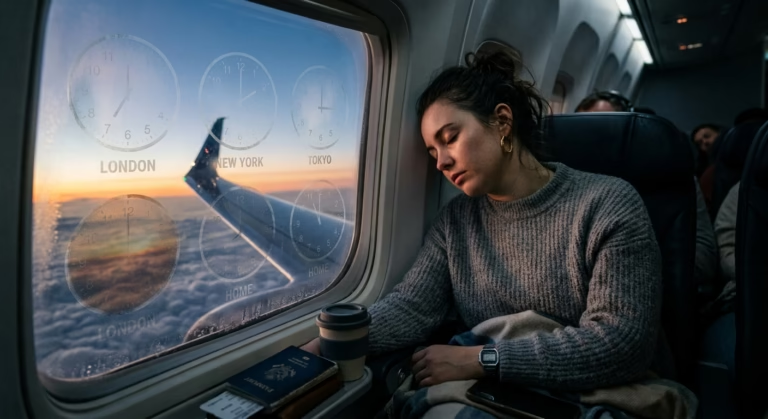
You step off the plane expecting to enjoy your destination.
Instead, you’re exhausted at noon, wide awake at 3 a.m., struggling to concentrate and wondering why your stomach suddenly feels completely out of sync.
This is Jetlag.
And it isn’t simply “being tired after a flight.”
When you travel rapidly across several time zones, your brain’s internal clock remains temporarily synchronized with your old location while the rest of the world is operating on a new schedule. That mismatch can affect your sleep, alertness, mood, digestion and ability to think clearly.
The good news?
Jetlag is usually temporary, and there are practical ways to help your body adjust.
In This Article:-
What Exactly Is Jetlag?
Jetlag is a temporary sleep and circadian-rhythm problem that occurs when you quickly travel across multiple time zones.
Your body has an internal timing system known as the circadian rhythm. It helps regulate when you feel sleepy, when you wake up, hormone activity, body temperature and several other biological processes.
The problem begins when your destination’s clock says one thing while your body’s clock says something completely different.
For example, imagine leaving India and flying west to the United States.
You arrive at your destination in the afternoon, but your body may still believe it’s late at night. You may feel like sleeping immediately—even though everyone around you is starting their day.
That is the basic problem behind Jetlag.
The more time zones you cross, the greater the likelihood that you’ll experience symptoms.
Why Does Jetlag Make You Feel So Strange?
Your body doesn’t instantly reset when the airplane lands.
Think of your circadian rhythm as an internal clock that needs time to catch up.
One of the strongest signals controlling this clock is light.
Light entering your eyes sends information to the brain about whether it is daytime or nighttime. Darkness encourages the production of melatonin, a hormone involved in sleep regulation. Bright light suppresses melatonin production and helps signal wakefulness.
When you suddenly cross several time zones, your normal relationship between light, darkness, meals, activity and sleep is disrupted.
That’s why Jet lag can affect much more than bedtime.
Jetlag Doesn’t Just Affect Sleep
Many people think Jetlag means one thing: being unable to sleep.
But the symptoms can be broader.
You may experience:
- Difficulty falling asleep
- Waking up too early
- Excessive daytime sleepiness
- Fatigue
- Difficulty concentrating
- Reduced alertness
- Mood changes
- Feeling generally unwell
- Constipation or diarrhea
- Changes in appetite or digestion
These symptoms can appear within a day or two after crossing multiple time zones and are generally more pronounced when more time zones are crossed.
This explains why someone can arrive at a beautiful holiday destination and still feel miserable for the first couple of days.
Why Flying East Can Feel Worse Than Flying West
Here’s something frequent travelers often notice:
Eastward travel can be harder to adapt to than westward travel.
Why?
Traveling east requires your biological clock to shift earlier. Your body generally finds it easier to delay its internal clock than advance it.
The CDC’s 2026 Yellow Book notes that average circadian adaptation may occur at approximately 1.5 hours per day after westward travel and about 1 hour per day after eastward travel, although individual responses vary.
So if you’ve crossed several time zones, don’t expect your body to completely reset after one night’s sleep.
Your internal clock may need several days.
The More Time Zones You Cross, the Bigger the Problem
A short flight across one time zone may barely affect you.
But cross several time zones rapidly, and the chances of Jetlag increase.
The CDC describes Jet lag as a temporary mismatch between your body’s normal daily rhythms and the local time at your destination.
For some travelers, the difference is manageable.
For others, especially after long-distance travel, it can interfere with work, meetings, exercise, vacations and social activities.
That’s why the timing of an important event matters.
If you have a major presentation, competition or business meeting immediately after an international flight, arriving earlier can give your body more time to adjust.
The CDC recommends considering arrival at least two days before important events when possible.
What About the Plane Itself?
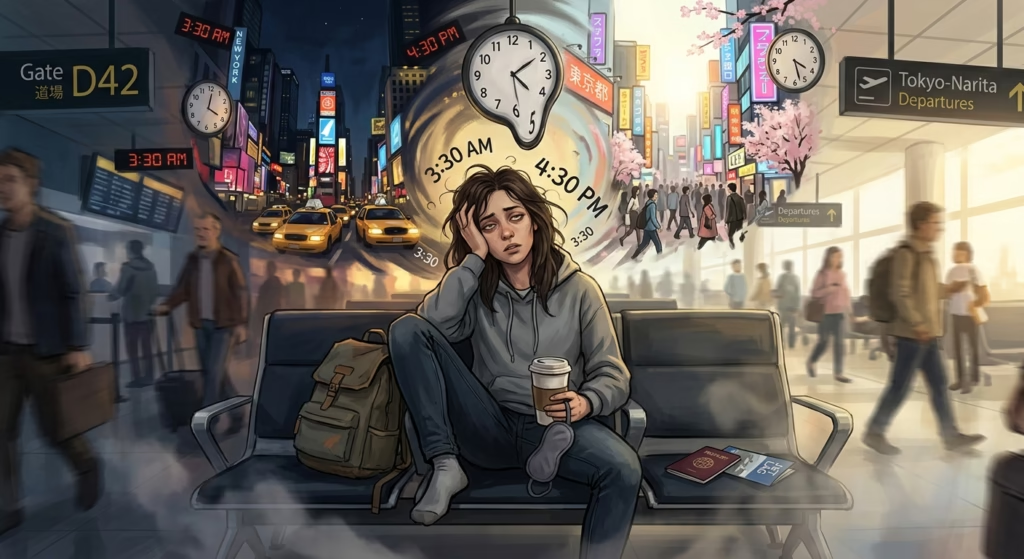
Time-zone changes are the main reason for Jetlag, but the flight experience can add to how lousy you feel.
Long flights often mean:
- Sitting for many hours
- Sleeping at unusual times
- Exposure to cabin noise
- Dry cabin air
- Irregular meals
- Reduced physical activity
- Alcohol or excessive caffeine
Dehydration and sleep disruption can make travel fatigue feel worse.
That doesn’t mean every symptom after a flight is caused by Jetlag.
Sometimes you’re simply exhausted from traveling.
The difference is that true Jetlag involves a mismatch between your internal biological clock and the local time.
How to Reduce Jetlag Before You Travel
The best time to fight Jetlag isn’t necessarily after you land.
It can start before takeoff.
1. Gradually Adjust Your Sleep
If you’re traveling east, consider moving your bedtime and wake time earlier during the days before departure.
If you’re traveling west, gradually shifting your schedule later may help.
The CDC recommends adjusting sleep by approximately one to two hours toward the destination schedule before travel when practical.
You don’t need to completely change your routine overnight.
Small adjustments may be easier for your body to tolerate.
2. Start Thinking in Destination Time
Once you’re traveling, start mentally switching to the destination’s schedule.
If it’s nighttime at your destination, try to sleep if circumstances allow.
If it’s daytime, try to remain awake.
The goal is to help your body begin responding to the new schedule rather than constantly following the time zone you left behind.
3. Use Light Strategically
This may be one of the most important tools for controlling Jetlag.
But there’s a catch:
The timing of light matters.
Morning light generally helps shift the body clock earlier, which can be useful after eastward travel.
Evening light can help shift the body clock later, which may be useful after westward travel.
Simply standing outside in bright sunlight at the wrong time isn’t necessarily the best strategy.
For complicated itineraries involving many time zones, the ideal timing can depend on your starting location, destination and direction of travel.
4. Don’t Turn Your Hotel Room Into a Midnight Office
After arriving, your body may tell you that 2 a.m. is the perfect time to check emails.
Don’t encourage it.
Keep your sleeping environment dark and quiet.
An eye mask, earplugs and reduced exposure to bright screens can make it easier to maintain your new sleep schedule.
Your goal is to give your brain clear signals:
Daytime means activity. Nighttime means sleep.
5. Be Careful With Caffeine
Caffeine can temporarily improve alertness when you’re fighting daytime sleepiness.
But using it too late can create another problem: difficulty sleeping at night.
The CDC recommends using caffeine strategically and avoiding it during the evening.
So that extra coffee at 7 p.m. may seem like a solution to Jetlag today—but it could become the reason you’re staring at the ceiling at 2 a.m.
6. Don’t Use Alcohol as a Sleep Shortcut
A drink may make you feel sleepy, but alcohol can interfere with sleep quality.
The CDC advises travelers to avoid alcohol because it can disrupt sleep and may contribute to dehydration.
If you’re trying to overcome Jetlag, getting better-quality sleep is more useful than simply becoming drowsy.
7. Stay Hydrated
Drink water before, during and after your flight.
The dry cabin environment and long periods of travel can contribute to dehydration, which may worsen how you feel.
Hydration won’t magically eliminate Jetlag, but it can remove one additional source of physical discomfort.
8. Keep Daytime Naps Short
You arrive at your hotel and feel like sleeping for four hours.
That may feel fantastic initially.
But a long afternoon nap can make nighttime sleep even more difficult.
The CDC suggests short naps of around 15–20 minutes, while its Yellow Book notes that naps of around 20–30 minutes may help maintain alertness without interfering as much with nighttime sleep.
The key is moderation.
9. Get Moving
A gentle walk outside can help you stay awake during the local daytime and expose you to natural light.
Exercise may also help you feel more alert.
You don’t need an intense workout.
A walk, light stretching or normal daytime activity may be enough to prevent you from spending the entire afternoon in bed.
Does Melatonin Help Jetlag?
Melatonin is a hormone naturally produced by your body that helps regulate the sleep-wake cycle.
Because melatonin production is closely connected to darkness, supplements have been studied as a potential way to help with Jetlag.
Mayo Clinic notes that evidence suggests melatonin can improve some Jetlag symptoms, including alertness and daytime sleepiness.
But there’s an important warning:
Timing matters.
Taking melatonin at the wrong time may not produce the result you’re expecting because the goal isn’t simply to make yourself sleepy. The goal can be to help shift your circadian rhythm.
If you’re considering melatonin, particularly if you take medications, have a medical condition, are pregnant or breastfeeding, speak with a healthcare professional first.
How Long Does Jetlag Last?
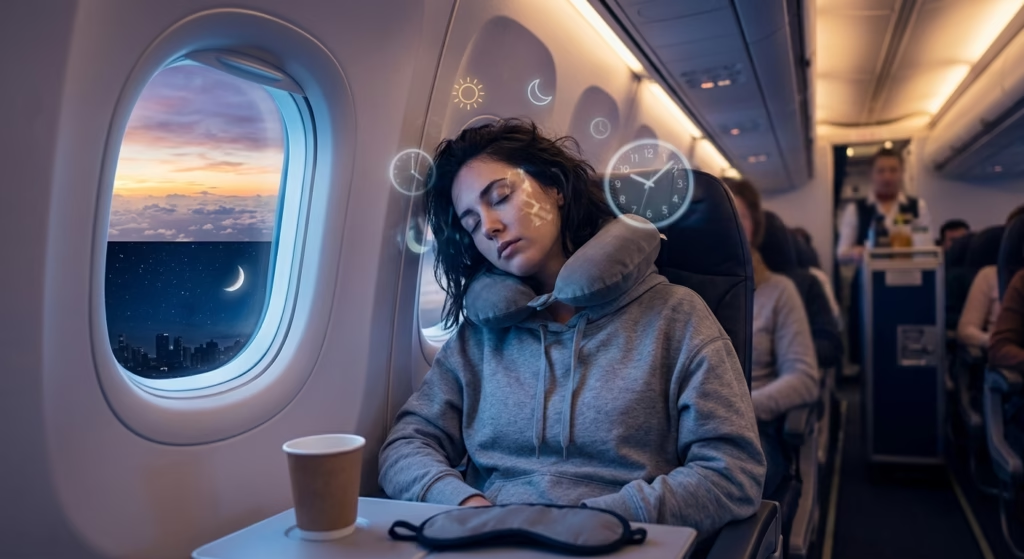
There’s no universal number of days.
The recovery time depends on factors such as:
- Number of time zones crossed
- Direction of travel
- Individual circadian rhythm
- Sleep loss during travel
- Light exposure
- Your schedule at the destination
Mayo Clinic notes that symptoms often improve within a few days, although they can sometimes last longer.
As a general rule, the more time zones you cross, the more time your body may need.
So don’t panic if you don’t feel completely normal the morning after landing.
Your body may simply need time to catch up.
The Biggest Mistake People Make With Jetlag
The biggest mistake is expecting your body to immediately follow the new clock.
Your phone changes time instantly.
Your watch changes instantly.
Your body doesn’t.
The internal clock needs biological signals—especially appropriately timed light, sleep and wakefulness—to adjust.
That’s why forcing yourself into a normal local schedule immediately can sometimes feel difficult.
Instead, give your body strong and consistent signals that tell it when the new “morning” and “night” actually are.
When Should You Talk to a Doctor?
Jetlag is usually temporary and doesn’t require medical treatment.
However, talk with a healthcare professional if sleep problems or excessive daytime sleepiness continue after you’ve had time to adjust, particularly if symptoms are affecting your work, driving or daily activities.
Frequent travelers who repeatedly experience significant problems may also benefit from discussing personalized strategies with a doctor or sleep specialist.
Don’t automatically assume persistent insomnia or severe daytime fatigue is just Jetlag.
Another sleep or medical problem could be responsible.
Final Takeaway: Don’t Let Jetlag Ruin Your Trip
Jetlag isn’t just tiredness after a long flight.
It’s a temporary disruption of your body’s internal clock caused by rapidly crossing time zones.
It can affect sleep, energy, concentration, mood and digestion.
But you don’t have to simply accept it.
Start adjusting your sleep before traveling when possible. Use daylight strategically. Stay hydrated. Keep caffeine and alcohol under control. Avoid long daytime naps. Stay active during the local day and give your body a consistent nighttime routine.
Most importantly, remember that your phone can change time in seconds.
Your body needs a little longer.
Give it the right signals, and Jetlag can become a short interruption rather than something that ruins the first days of your trip.
Frequently Asked Questions About Jetlag
1. What is Jetlag?
Jetlag is a temporary disruption of the body’s circadian rhythm that occurs when you rapidly travel across multiple time zones. It can cause sleep problems, daytime fatigue, concentration difficulties, mood changes and digestive symptoms.
2. How many time zones cause Jetlag?
Jetlag can occur when crossing two or more time zones, although symptoms become more likely and potentially more severe as the number of time zones increases.
3. Is Jetlag worse when traveling east?
Often, yes. Eastward travel generally requires the body’s internal clock to shift earlier, which tends to be harder than delaying the circadian rhythm after westward travel.
4. How long does Jetlag usually last?
Jetlag commonly improves within several days, but recovery varies according to the number of time zones crossed, travel direction and individual factors.
5. Does sunlight help Jetlag?
Yes. Properly timed light exposure can help reset the circadian clock. Morning light is generally useful for shifting the clock earlier, while evening light can help shift it later.
6. Does melatonin help Jetlag?
Research suggests melatonin can improve some Jetlag symptoms, but the timing of administration is important. Speak with a healthcare professional before using melatonin, especially if you take medications or have an underlying health condition.
7. Should I sleep during the day after a long flight?
A short nap can help with daytime sleepiness, but long naps may make it harder to sleep at the local nighttime. The CDC recommends keeping daytime naps short.
8. Does drinking water prevent Jetlag?
Water cannot prevent the circadian disruption responsible for Jetlag, but staying hydrated may help reduce additional discomfort associated with long-distance air travel and dehydration.
9. Does caffeine make Jetlag worse?
Caffeine can temporarily improve alertness, but consuming it late in the day can interfere with nighttime sleep. Strategic use earlier in the day is generally preferable.
10. When should I see a doctor for Jetlag?
Consider medical advice if sleep problems or excessive daytime sleepiness persist, interfere with safety or daily functioning, or occur frequently with travel.
Medical Disclaimer: This article is intended for general educational purposes and does not replace individualized medical advice, diagnosis or treatment. If you have persistent sleep problems, significant daytime sleepiness, take medications or have an underlying health condition, consult a qualified healthcare professional before using medications or supplements for Jetlag.
Sources
- Centers for Disease Control and Prevention (CDC). Jet Lag Disorder — Yellow Book 2026.
- CDC Yellow Book / NCBI Bookshelf. Jet Lag Disorder — 2026 Edition.
- CDC Yellow Book / NCBI Bookshelf. General Tips for Managing Jet Lag.
- Mayo Clinic. Jet Lag Disorder — Symptoms and Causes.
- Mayo Clinic. Jet Lag Disorder — Diagnosis and Treatment.
- Centers for Disease Control and Prevention (CDC). Travel by Air and Sea — Yellow Book 2026.
- National Library of Medicine (NCBI). Diagnostic Criteria for Jet Lag Disorder.
- PubMed. Jet Lag Disorder — CDC Yellow Book 2026.
- Mayo Clinic. Melatonin — What You Need to Know.
We have a very strict reviewing guidelines on how to run every article in the website. Everything we write follow a very strict reviewing process by following high quality peer-reviewed studies. Every source we follow are credible and accurate and again reviewed by our doctors to give you all high quality advise and content.
For the latest health trending topics and top of the line updated health and fitness related news and conditions with insights from board certified experienced health professionals, follow Healing Doctor on Facebook, Instagram and Whatsapp.