

Medically reviewed by Dr Itender Pal Singh
Skip breakfast. Stop eating after 6 p.m. Eat during an eight-hour window. Fast for 16 hours.
It sounds simple.
And that simplicity is one reason intermittent fasting has become one of the most discussed approaches to weight loss and metabolic health.
But there is a problem.
The internet has sometimes turned fasting into something much bigger than the science can currently support.
It has been promoted as a way to burn fat, control blood sugar, reduce inflammation, protect the brain, slow ageing and possibly extend lifespan.
Some of these claims have biological plausibility. Some have been supported by animal studies or early human research. But that does not mean that every person who follows a fasting schedule will experience all of these benefits.
The more recent evidence paints a more practical picture:
Intermittent fasting can help some people lose weight and improve certain health markers, but it does not appear to be a magic metabolic switch—and it is not consistently superior to conventional calorie restriction.
That distinction matters.
In This Article
What exactly is intermittent fasting?
Intermittent fasting is not a single diet.
It is an eating pattern in which periods of eating alternate with periods of fasting.
Unlike many diets, it does not necessarily tell you what foods to eat. Instead, it mainly changes when you eat.
Common approaches include:
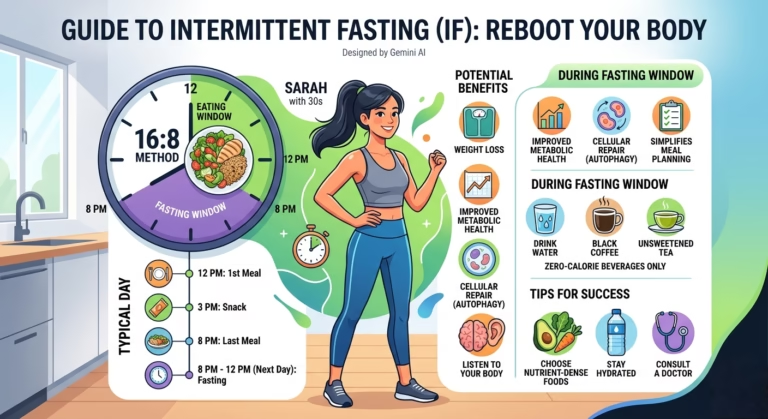
1. The 16:8 method
You fast for approximately 16 hours and eat during an 8-hour window.
For example:
- Eat between 10 a.m. and 6 p.m.
- Fast from 6 p.m. until 10 a.m. the next day.
This is one of the most popular forms of time-restricted eating.
2. The 14:10 method
You fast for 14 hours and eat during a 10-hour window.
This is less restrictive and may be easier for beginners.
3. Alternate-day fasting
You alternate between days of normal eating and days with very low calorie intake or fasting.
This approach is considerably more restrictive.
4. Periodic or whole-day fasting
Some plans involve fasting for an entire day once or more per week.
These approaches are different from daily time-restricted eating and should not automatically be treated as interchangeable.
The National Institute of Diabetes and Digestive and Kidney Diseases describes intermittent fasting as an umbrella term covering several different approaches. That variation is important because research results from one type of fasting cannot automatically be applied to every other type.
Why did intermittent fasting become so popular?
The appeal is obvious.
Instead of counting every calorie, weighing every food and calculating every macronutrient, you establish a time boundary.
For some people, that means fewer opportunities to eat.
A person who normally snacks after dinner, drinks calorie-containing beverages at night and eats breakfast early may naturally consume fewer calories after switching to a shorter eating window.
That may be one of the simplest explanations for some of the weight-loss effect.
And recent research supports this possibility.
A 2026 randomized trial examining adults with obesity found that participants following an 8-hour self-selected eating window reduced their energy intake substantially, while their changes in diet and eating frequency were broadly similar to those seen with an energy-restricted diet.
In other words, the fasting window may work partly because it changes eating behaviour.
That is very different from saying fasting automatically makes the body burn dramatically more fat.
The big question: Does intermittent fasting actually cause more weight loss?
Here is where the hype needs to be separated from the evidence.
A major 2025 BMJ systematic review and network meta-analysis examined 99 randomized clinical trials involving 6,582 adults.
The researchers compared different intermittent-fasting strategies with continuous energy restriction and unrestricted eating.
The results were interesting.
Both intermittent-fasting strategies and continuous energy restriction were associated with reductions in body weight compared with unrestricted eating.
However, when different fasting strategies were compared with continuous calorie restriction, the differences were generally small.
Alternate-day fasting showed an average additional weight reduction of about 1.29 kg compared with continuous energy restriction.
That is a measurable difference—but it is not evidence that fasting produces dramatically greater weight loss for everyone.
The researchers also found that the advantages became less convincing in studies lasting at least 24 weeks.
This is an important detail that can get lost in social-media headlines.
Short-term weight loss is not the same thing as long-term weight management.
A 12-month trial delivered another reality check
One of the most useful studies compared time-restricted eating directly with conventional calorie restriction.
Researchers randomized 139 adults with obesity to either:
- an 8-hour eating window plus calorie restriction, or
- daily calorie restriction alone.
After 12 months, the time-restricted eating group lost an average of 8.0 kg, while the calorie-restriction group lost 6.3 kg.
At first glance, that seems like a clear win for fasting.
But statistically, the difference between the groups was not significant.
The researchers concluded that time-restricted eating did not produce greater reductions in body weight, body fat or metabolic risk factors than daily calorie restriction.
So what should you take away?
Not that fasting doesn’t work.
Rather:
Fasting can work, but it may work largely because it helps people reduce or organize their energy intake—not because the clock itself has a powerful independent fat-burning effect.
But wait—new 2026 research has produced some encouraging results
The story is not completely negative.
A 2026 randomized controlled trial called the TREAD trial examined a 10-hour time-restricted eating schedule in adults with obesity.
After 12 weeks, participants assigned to time-restricted eating lost an average of 4.59 kg, compared with 1.68 kg in the standard-care group.
The difference was approximately 2.91 kg.
The researchers reported that much of the reduction appeared to come from body fat.
That sounds promising.
But there is an important limitation: it was a relatively small, single-center study with a 12-week intervention.
This is why one positive trial should not be used to declare fasting the superior diet.
Instead, it adds another piece to a much larger puzzle.
So is intermittent fasting overhyped?
Some claims are. The basic concept is not.
The strongest evidence supports a fairly modest conclusion:
Intermittent fasting can be an effective eating strategy for weight loss, but it is not clearly superior to other sustainable methods of reducing calorie intake.
That may sound less exciting than claims about “switching on fat-burning genes.”
But it is much more useful.
If someone finds a 14:10 or 16:8 schedule easy to follow, it can be a practical way to reduce snacking and control food intake.
If someone hates skipping breakfast, becomes irritable when fasting or overeats at night, there is no compelling reason to force that person into a fasting schedule.
A healthy diet that can actually be maintained may be more valuable than a theoretically perfect diet that lasts three weeks.
What happens to your body during fasting?
During a fasting period, your body continues to use energy.
After food intake stops, insulin levels generally fall and the body begins relying more heavily on stored energy.
As fasting continues, fat oxidation can increase and ketone production can rise.
This has led to considerable interest in whether fasting can trigger beneficial cellular processes.
Some of those mechanisms have been demonstrated strongly in laboratory and animal research.
But translating those findings into claims about human longevity or disease prevention is much more difficult.
That is one of the biggest problems with online fasting content:
A biological mechanism is not the same thing as a proven clinical benefit.
For example, showing that fasting influences a cellular pathway does not prove that fasting will make a person live longer.
Human clinical trials are needed to establish that.
Can intermittent fasting improve blood sugar?
Possibly—but the answer depends heavily on the individual.
Weight loss itself can improve insulin sensitivity and blood glucose regulation.
Changing meal timing may also influence glucose patterns.
However, fasting is not automatically better than other approaches.
A 2026 randomized clinical trial in adults at risk of type 2 diabetes found that time-restricted eating was not clearly superior to dietetic guidance for improving HbA1c. The researchers reported that absolute HbA1c changes were small and not clinically meaningful in either intervention.
This reinforces a broader point:
A fasting schedule should be viewed as one possible tool—not a replacement for evidence-based diabetes care.
What about cholesterol, blood pressure and other metabolic benefits?
Research suggests that weight loss associated with fasting can improve several cardiometabolic markers.
The 2025 BMJ analysis found that intermittent-fasting approaches can reduce body weight and may improve several cardiometabolic outcomes compared with unrestricted eating. However, differences between fasting and continuous calorie restriction were generally modest.
This matters because it changes the way we should think about fasting.
The question isn’t:
“Does fasting have magical metabolic benefits?”
A better question is:
“Can this eating pattern help a particular person eat less, improve food choices and maintain a healthy weight?”
If the answer is yes, it may be useful.
Could intermittent fasting help you eat fewer calories without counting them?
For some people, yes.
This may actually be one of its biggest practical advantages.
Imagine someone who usually eats:
- Breakfast at 7 a.m.
- Mid-morning snack
- Lunch
- Afternoon snack
- Dinner
- Dessert
- Late-night snacks
Restricting the eating window may eliminate several of those eating occasions.
A 2026 randomized trial found that participants using an 8-hour eating window ate about 1.1 fewer eating occasions per day by the end of the intervention. Their energy intake also fell by about 469 kcal per day from baseline.
That gives us a plausible explanation for weight loss.
The fasting window may make calorie reduction easier.
But fasting does not cancel out unhealthy food
This is where many people get confused.
You can fast for 16 hours and then consume:
- sugary drinks,
- fried foods,
- refined carbohydrates,
- highly processed snacks,
- excessive calories and
- very large portions
during the remaining eight hours.
The fasting period does not magically erase those calories.
Healthy eating still matters.
NIDDK recommends a sustainable eating pattern containing vegetables, fruits, whole grains and appropriate protein sources such as beans, lentils, nuts, eggs, seafood and lean meats.
The American Heart Association’s 2026 dietary guidance likewise emphasizes overall dietary quality and long-term heart-healthy eating rather than dependence on a single diet trend.
Does fasting burn more fat than a normal diet?
This question needs careful wording.
Fasting can increase the proportion of energy coming from stored fat during fasting periods.
But greater fat burning at a particular moment does not automatically equal greater long-term body-fat loss.
Long-term body weight depends heavily on total energy balance, food intake, physical activity, metabolic adaptation and how consistently a person follows the eating pattern.
That is why a person can experience increased fat oxidation while fasting but still fail to lose weight if they compensate by eating substantially more during the feeding period.

Is 16:8 the best intermittent fasting schedule?
There is no strong evidence that 16:8 is universally the “best” schedule.
A 14:10 pattern may work better for one person.
A 12-hour overnight eating break may be more realistic for another.
And some people may do better without fasting at all.
The best eating pattern is usually the one that:
- provides adequate nutrition,
- fits your lifestyle,
- does not cause excessive hunger,
- does not lead to binge eating,
- supports a healthy body weight,
- can be maintained long term.
This is where personalized nutrition beats internet diet rules.
Who should be careful with intermittent fasting?
Fasting is not appropriate for everyone.
People who should seek medical advice before starting a fasting program include those with diabetes, people taking medicines that can cause low blood glucose, pregnant or breastfeeding women, children and adolescents, and people with a current or previous eating disorder.
Johns Hopkins Medicine specifically advises against intermittent fasting for children and teenagers, pregnant or breastfeeding women, people with type 1 diabetes using insulin and people with a history of eating disorders.
People with diabetes need particular caution.
NIDDK notes that fasting can increase the risk of hypoglycemia in people taking insulin or certain diabetes medications. Medication adjustments may be necessary, and these should not be made independently.
What are the possible side effects?
Some people tolerate fasting well.
Others may experience:
- hunger,
- headache,
- dizziness,
- fatigue,
- irritability,
- difficulty concentrating,
- nausea,
- constipation,
- overeating during the feeding window.
Johns Hopkins notes that people experiencing unusual anxiety, headaches, nausea or other symptoms should discuss the problem with a healthcare professional.
Severe or persistent symptoms should not simply be dismissed as the body “detoxing.”
There is no medical prize for suffering through a diet.
The biggest mistake: making the fasting window too extreme
Longer fasting is not automatically better.
Someone who can comfortably maintain a 12–14-hour overnight fast may not benefit from pushing themselves into prolonged fasting.
The goal should not be to see how long you can avoid food.
The goal should be to establish a sustainable eating pattern that supports health.
For many people, simply stopping late-night snacking and maintaining a consistent overnight fasting period may provide a more realistic starting point.
How to start intermittent fasting safely
If you are a generally healthy adult and have decided to try a time-restricted eating pattern, consider starting gradually.
Step 1: Begin with a 12-hour overnight break
For example:
7 p.m. dinner → 7 a.m. breakfast
If this feels comfortable, you can discuss whether a longer window is appropriate.
Step 2: Avoid turning the feeding window into a food marathon
Eating fewer hours does not mean you should compensate with huge meals.
Step 3: Prioritize protein and fiber
Include foods such as:
- eggs,
- fish,
- chicken,
- beans,
- lentils,
- yogurt,
- vegetables,
- fruits,
- whole grains,
- nuts and seeds.
Step 4: Drink enough fluids
During a typical intermittent-fasting plan, water is generally permitted during the fasting period.
However, religious or medically prescribed fasting can involve different fluid restrictions and should be treated differently.
Step 5: Watch your response
Persistent dizziness, weakness, headaches, binge eating or other concerning symptoms are reasons to stop and seek medical advice.
Step 6: Don’t ignore exercise
Weight management is not only about meal timing.
Regular physical activity helps with energy expenditure, cardiovascular fitness, muscle preservation and long-term weight maintenance. NIDDK emphasizes both healthy eating and physical activity as key components of sustainable weight management.
What does the latest evidence actually tell us?
The science is becoming clearer—but it is not saying what social media sometimes suggests.
Here is the evidence-based version:
Intermittent fasting can help with weight loss.
But conventional calorie restriction can also work.
Intermittent fasting may improve some cardiometabolic markers.
But it has not consistently demonstrated dramatic advantages over other effective diets.
Some people find fasting easier to follow than calorie counting.
That can be clinically useful.
Fasting changes metabolism during the fasting period.
But that does not prove dramatic anti-ageing or longevity effects in humans.
Recent 2026 studies continue to show potentially useful effects of time-restricted eating.
But several are relatively short, and larger, longer-term studies are still needed.
The bottom line: Is intermittent fasting worth trying?
If you expected a simple yes-or-no answer, here it is:
It can be—but you don’t need it.
The evidence does not support calling intermittent fasting a miracle diet.
Nor does the evidence justify saying that fasting is useless.
It is better understood as a dietary timing strategy that can help some people reduce food intake, limit snacking and lose weight.
The biggest benefit may not come from fasting itself.
It may come from what fasting replaces.
If your fasting schedule eliminates late-night snacks, sugary drinks and unnecessary grazing, it can improve your overall calorie intake.
If it causes you to become excessively hungry and binge during your eating window, it may work against you.
And if you have diabetes, take glucose-lowering medication, are pregnant or breastfeeding, are under 18, or have a history of an eating disorder, fasting should not be started casually.
The current science points toward a much less dramatic—but more useful—conclusion:
Don’t ask whether intermittent fasting is the best diet. Ask whether it is a safe, nutritious and sustainable eating pattern that works for you.
That is a question the evidence can actually answer.
Frequently Asked Questions About Intermittent Fasting
1. What is intermittent fasting?
Intermittent fasting is an eating pattern that alternates periods of eating with periods of fasting. Time-restricted eating, alternate-day fasting and whole-day fasting are different forms.
2. Does intermittent fasting help you lose weight?
Yes, it can help with weight loss. However, evidence suggests that its overall weight-loss effect is generally similar to conventional calorie restriction rather than dramatically better. A 2025 BMJ analysis of 99 randomized trials found that most fasting strategies reduced weight compared with unrestricted eating.
3. Is 16:8 fasting effective?
The 16:8 approach can be effective for some people because it limits the daily eating window and may reduce calorie intake. However, there is no strong evidence that 16:8 is universally superior to other sustainable eating patterns.
4. Can I drink water while fasting?
In typical time-restricted eating plans, water is generally allowed during the fasting period. However, fasting protocols differ, and people with medical conditions should follow individualized medical advice.
5. Can intermittent fasting reduce belly fat?
Weight loss from a calorie deficit can reduce overall body fat, including abdominal fat. However, fasting cannot specifically target belly fat. The body determines where fat is lost.
6. Does intermittent fasting lower blood sugar?
It may improve glucose-related measures in some people, particularly when weight loss occurs. However, clinical results are mixed, and people taking diabetes medication need medical supervision because fasting can cause hypoglycemia.
7. Is intermittent fasting safe for everyone?
No. Children and teenagers, pregnant or breastfeeding women, people with type 1 diabetes using insulin and people with eating-disorder histories should generally avoid it or seek specialist medical advice.
8. Is intermittent fasting better than calorie counting?
Not necessarily. Both approaches can produce weight loss. Research suggests that fasting may be easier for some people to follow, but it has not consistently produced substantially greater long-term weight loss than calorie restriction.
9. Can intermittent fasting slow ageing?
There are interesting biological and animal findings related to fasting and ageing, but there is currently insufficient human evidence to promise that intermittent fasting extends lifespan.
10. What should I eat after fasting?
Break your fast with a balanced meal containing protein, vegetables or fruit, high-fiber carbohydrates and healthy fats. Avoid treating the end of the fast as an excuse for a very large meal dominated by ultra-processed foods.
Final verdict
The biggest mistake would be to swing from one extreme to another.
Intermittent fasting is neither a miracle nor a scam.
It is one dietary strategy among several.
For some people, limiting eating hours makes calorie control easier. For others, it creates hunger, overeating or an unsustainable routine.
The latest evidence—including large systematic reviews and new 2026 trials—suggests that fasting can support weight loss and may offer some metabolic benefits, but its advantages over conventional calorie restriction are generally modest and remain an active area of research.
So don’t choose a fasting schedule because an influencer promised that it will “reset” your metabolism.
Choose it only if it helps you build a healthy eating pattern you can realistically maintain.
That is where the real benefit begins.
Medical Disclaimer :- This article is for general educational purposes and does not replace individualized medical advice, diagnosis or treatment. People with diabetes, those taking glucose-lowering medicines, pregnant or breastfeeding women, people under 18, people with eating disorders, and anyone with a significant medical condition should consult a qualified healthcare professional before starting a fasting program.
Sources
- BMJ — Systematic review and network meta-analysis of 99 randomized clinical trials
The review included 6,582 adults and compared alternate-day fasting, time-restricted eating, whole-day fasting and continuous energy restriction.
Read the BMJ research - New England Journal of Medicine — Calorie Restriction With or Without Time-Restricted Eating
A 12-month randomized trial involving 139 adults with obesity found no statistically significant advantage for time-restricted eating over daily calorie restriction.
Read the NEJM study - PubMed — 2026 TREAD Randomized Controlled Trial
A 12-week trial examined a 10-hour time-restricted eating intervention in adults with obesity and reported greater weight loss than standard care.
Read the 2026 TREAD trial - NIDDK/NIH — Intermittent Fasting and Type 2 Diabetes
Provides expert discussion of fasting, weight management and diabetes.
Read the NIDDK guidance - NIDDK/NIH — Fasting Safely With Diabetes
Explains hypoglycemia, medication concerns and the need for medical supervision in people with diabetes.
Read NIDDK’s fasting guidance - Johns Hopkins Medicine — Intermittent Fasting: What Is It and How Does It Work?
Covers fasting approaches, potential benefits, side effects and groups who should avoid fasting.
Read Johns Hopkins Medicine’s guide - PubMed — 2026 Randomized Trial of Time-Restricted Eating and Eating Patterns
Examined an 8-hour eating window and changes in meal frequency and dietary intake.
Read the 2026 study - American Heart Association — 2026 Dietary Guidance
Provides current evidence-based dietary guidance emphasizing overall dietary quality and cardiovascular health.
Read the AHA dietary guidance
We have a very strict reviewing guidelines on how to run every article in the website. Everything we write follow a very strict reviewing process by following high quality peer-reviewed studies. Every source we follow are credible and accurate and again reviewed by our doctors to give you all high quality advise and content.
For the latest health trending topics and top of the line updated health and fitness related news and conditions with insights from board certified experienced health professionals, follow Healing Doctor on Facebook, Instagram and Whatsapp.