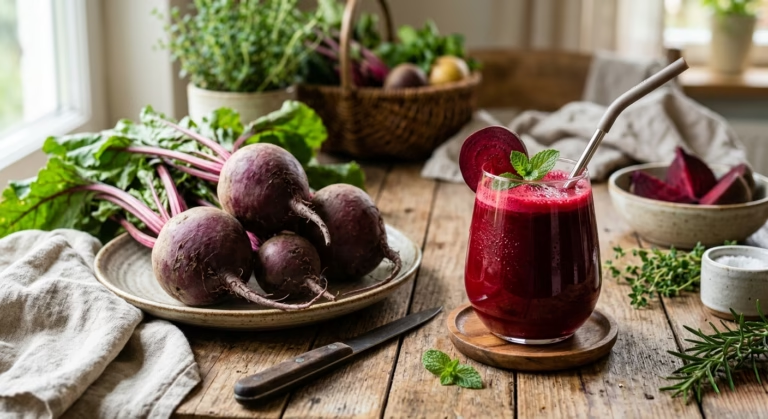

You may know beet root as the deep-red vegetable that ends up in salads, soups, curries and juices.
But there is another reason researchers have been paying attention to it.
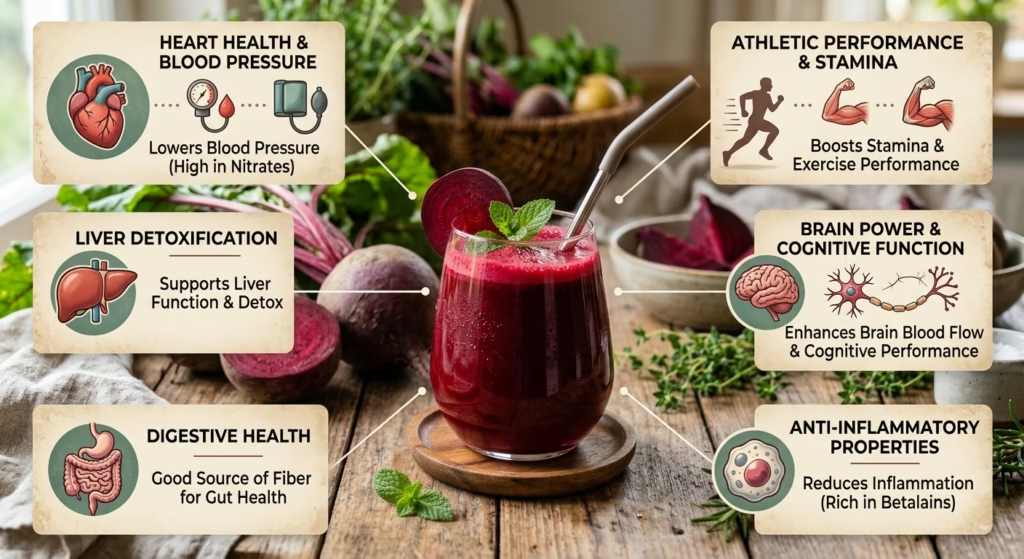
Beetroot contains naturally occurring dietary nitrate, a compound that can be converted in the body into nitric oxide. Nitric oxide helps relax blood vessels, supporting blood flow and regulating blood pressure. This has led researchers to investigate whether beetroot and beetroot juice can help people with hypertension, improve circulation and even make exercise feel easier.
The evidence is promising—but it is not a reason to treat beet root as a replacement for medication or a balanced diet.
So, what does the science actually show?
In This Article
High Blood Pressure and Poor Circulation Often Have No Warning Signs
High blood pressure is frequently called a “silent” condition because a person can feel perfectly well while blood vessels are under increased pressure.
Over time, uncontrolled hypertension can increase the risk of cardiovascular and kidney disease.
This is where diet becomes important.
Vegetables naturally provide potassium, fibre, antioxidants and other compounds that support cardiovascular health. Some vegetables, including beet root and leafy greens, are also particularly rich sources of dietary nitrate.
But could adding beet root to your diet actually make a measurable difference?
Research suggests it may.
The Solution May Be Hiding in Beetroot’s Nitrate
The most studied component of beet root is not its colour.
It is nitrate.
When you eat nitrate-rich vegetables, nitrate can enter the bloodstream and participate in the nitrate-nitrite-nitric oxide pathway.
Here is the simplified process:
Beet root → dietary nitrate → nitrite → nitric oxide → wider blood vessels → improved blood flow
Oral bacteria play an important role in this pathway by converting nitrate into nitrite. The nitrite can subsequently contribute to nitric oxide formation.
Nitric oxide acts as a vasodilator. In simple terms, it helps blood vessels relax.
That mechanism is one of the main reasons scientists are investigating beet root for cardiovascular health and exercise performance.
1. Beetroot May Help Lower Blood Pressure
This is one of the strongest areas of research surrounding beet root.
A meta-analysis of randomized clinical trials found that beet root juice supplementation was associated with an average reduction in systolic blood pressure of about 3.55 mmHg and diastolic blood pressure of about 1.32 mmHg compared with control groups.
Another meta-analysis involving adults with hypertension found that nitrate-rich beet root juice reduced systolic blood pressure by approximately 4.95 mmHg, although the effect on diastolic blood pressure was not statistically significant.
More recently, a 2024 systematic review focusing specifically on people with hypertension included 11 randomized trials involving 349 participants. Beet root juice was associated with a mean reduction in clinical systolic blood pressure of 5.31 mmHg compared with controls.
However, the researchers rated the certainty of this evidence as low, and no significant improvement was found for clinical diastolic or 24-hour blood pressure measurements.
What does that mean in real life?
It means beet root may contribute to better blood pressure control, particularly when incorporated into an overall healthy diet.
But it does not mean you should stop prescribed blood-pressure medication and start drinking beetroot juice instead.
Think of it as a possible dietary tool—not a cure.
2. It May Improve Blood Vessel Function
Healthy blood vessels need to expand and contract appropriately.
This process is partly controlled by the endothelium, the thin layer of cells lining the inside of blood vessels.
Nitrate-derived nitric oxide can influence vascular relaxation and blood flow.
A systematic review and meta-analysis of randomized trials found that beet root-derived inorganic nitrate was associated with improvements in flow-mediated dilation, a measure commonly used to assess endothelial function, as well as a reduction in pulse-wave velocity, a marker related to arterial stiffness.
This is important because blood-vessel health is closely connected to cardiovascular health.
However, improved laboratory markers do not automatically mean that beet root prevents heart attacks or strokes. Long-term clinical outcome studies are still needed.
3. Beetroot Could Give Exercise Performance a Small Boost
This is where beet root juice has attracted considerable attention from sports researchers.
During exercise, muscles need oxygen and nutrients. Nitric oxide influences blood flow and several processes involved in muscle function.
Research suggests that dietary nitrate can reduce the oxygen cost of exercise in some situations and may improve exercise capacity.
The Australian Institute of Sport lists dietary nitrate/beet root juice as a performance supplement with evidence for certain types of exercise, particularly events lasting roughly 4–30 minutes and some intermittent activities.
But there is an important catch:
Beet root does not work equally well for everyone.
Highly trained endurance athletes may experience less benefit than recreationally active people.
A 2026 systematic review and meta-analysis involving 38 studies and 703 participants found that beet root juice produced a small but statistically significant improvement in VO₂max/VO₂peak. The effect was more apparent in recreationally active adults, while evidence in highly trained athletes was less convincing.
So, beet root juice is not a magic performance enhancer.
It may provide a modest advantage in selected circumstances.
4. What About Running, Cycling and High-Intensity Exercise?
Research has examined nitrate supplementation in several types of exercise.
A systematic review and meta-analysis of nitrate supplementation found a moderate benefit for time-to-exhaustion exercise, although improvements in time-trial and graded exercise performance were smaller and did not reach statistical significance in that analysis.
Another 2024 meta-analysis examining recreationally active adults during repeated cycling sprints found that dietary nitrate significantly affected time-to-peak power, but did not significantly improve mean, peak or minimum power.
This tells us something important:
The effect depends on the type of exercise.
Beet root juice may be more useful for certain endurance or high-intensity activities than for every workout.
If someone drinks beet root juice before a casual 20-minute walk, they should not expect a dramatic transformation.
5. Beetroot Contains More Than Nitrate
Nitrate gets much of the scientific attention, but it is not the only reason to eat beet root.
Beet root also contains:
- Dietary fibre
- Folate
- Potassium
- Magnesium
- Iron
- Vitamin C
- Polyphenols
- Betalains
- Other plant compounds
Betalains are pigments responsible for much of beet root’s characteristic red-purple colour. They have antioxidant properties and are being investigated for their potential biological effects.
However, laboratory antioxidant activity should not automatically be interpreted as proof that beet root prevents cancer, heart disease or other illnesses in humans.
That distinction matters.
What happens in a test tube is not always what happens inside the human body.
6. Could Beetroot Support Heart Health?
Potentially—but the wording matters.
Research indicates that nitrate-rich beet root may improve several cardiovascular markers, including blood pressure, endothelial function and arterial stiffness.
Those are meaningful findings.
But researchers have not established that routinely eating beetroot directly prevents heart attacks, strokes or cardiovascular deaths.
Therefore, it is more accurate to say:
Beet root may support cardiovascular health as part of a healthy diet.
That is very different from saying:
Beet root prevents heart disease.
The first statement is supported by current evidence. The second goes beyond it.
7. What About Blood Sugar and Diabetes?
There is growing interest in beetroot and metabolic health, but the evidence is not as established as the blood-pressure research.
The News-Medical article discusses a study in which people with type 2 diabetes consumed 100 grams of raw beet root daily for eight weeks, with reported improvements in several metabolic measures.
These findings are interesting, but one study does not establish that beet root can treat diabetes.
People with diabetes should continue following their prescribed treatment plan, including medication, physical activity and dietary recommendations.
Beet root can be part of a balanced diet, but it should not be presented as a diabetes treatment.
8. Can Beetroot Improve Brain Blood Flow?
Another area under investigation is brain circulation.
Because nitric oxide influences blood-vessel function, researchers have explored whether dietary nitrate can affect blood flow to the brain.
Some studies have reported changes in cerebral blood flow or cognitive measures, particularly in older adults and under certain exercise conditions.
But this evidence is still developing.
At present, it is too early to claim that eating beet root prevents dementia or improves memory in everyone.
9. How Much Beetroot or Beetroot Juice Should You Take?
There is no single universally established “best” amount of whole beet root for general health.
For sports research, the situation is different.
The Australian Institute of Sport notes that studies commonly use approximately 6–8 mmol of nitrate, equivalent to about 350–500 mg nitrate, around 2–3 hours before exercise.
Some products provide this amount in a small concentrated beet root juice shot.
However, nitrate content can vary considerably between beetroot products and preparations. Simply drinking an unspecified amount of homemade juice does not guarantee a particular nitrate dose.
For everyday nutrition, eating beet root as a vegetable is a sensible approach.
For targeted sports supplementation, standardized nitrate-containing products may provide a more predictable dose.
10. When Is the Best Time to Drink Beetroot Juice?
If you are using beetroot juice specifically for exercise performance, research commonly uses it approximately 2–3 hours before exercise.
That timing is linked to the way dietary nitrate is absorbed and converted through the nitrate-nitrite-nitric oxide pathway.
Some athletes also use nitrate supplementation for several days before an event rather than relying on one dose.
However, there is no need for most people to follow an athletic supplementation protocol simply to enjoy beet root as part of their diet.
11. One Thing You Should Know: Mouthwash May Matter
This sounds strange, but it is scientifically relevant.
The conversion of nitrate to nitrite depends partly on bacteria in the mouth.
Antibacterial mouthwash can interfere with these bacteria and may reduce nitrate-to-nitrite conversion.
The Australian Institute of Sport therefore notes that antibacterial mouthwash may blunt some physiological effects of nitrate supplementation.
That does not mean you should stop practicing good oral hygiene.
It means people specifically using beet root juice as a nitrate-performance supplement should understand that the oral microbiome is part of the pathway.
12. Is Beetroot Safe?
For most healthy people, beetroot consumed as a normal food is generally well tolerated.
However, concentrated beet root juice can sometimes cause gastrointestinal discomfort. The Australian Institute of Sport recommends that athletes test supplementation during training rather than trying it for the first time immediately before an important competition.
Another harmless effect can be alarming if you do not know about it.
Beetroot can turn your urine or stool pink or reddish.
This is called beeturia and is generally harmless.
But if you notice blood in your urine or stool, do not automatically assume it is from beetroot—especially if the colour persists or is accompanied by pain or other symptoms. Seek medical advice.
13. What About Kidney Stones?
Beetroot contains oxalates.
People who have a history of calcium oxalate kidney stones may therefore need to consider their total dietary oxalate intake rather than consuming very large quantities of beetroot juice or concentrated beet products.
The News-Medical review also highlights oxalic acid as a consideration for people with a history of calcium oxalate stones.
If you have recurrent kidney stones, discuss your diet with your doctor or a qualified dietitian rather than assuming that more beet root is automatically better.
14. Beetroot Juice vs Whole Beetroot: Which Is Better?
For everyday health, whole beet root has an important advantage:
You also get the vegetable’s fibre and the benefit of eating a minimally processed food.
Juice and concentrated shots can be useful when someone wants a more standardized nitrate dose, particularly in sports research.
But concentrated products can also make it easier to consume large amounts quickly.
So the choice depends on the goal.
For everyday nutrition:
Choose whole beetroot as part of a varied diet.
For sports supplementation:
A standardized beetroot juice product with a clearly stated nitrate content may be more predictable.
15. Don’t Make This Common Beet root Mistake
More is not necessarily better.
The evidence does not show that drinking enormous quantities of beet root juice produces proportionally greater health benefits.
The Australian Institute of Sport notes that doses above approximately 10–12 mmol nitrate have not consistently shown greater effectiveness than 6–8 mmol for exercise supplementation.
And long-term use of high-dose nitrate supplements has not been studied as extensively as ordinary vegetable consumption.
The goal should be consistent, sensible nutrition—not mega-dosing.
The Bottom Line: Should You Eat Beet root?
Yes, for most people, beet root can be a useful addition to a balanced diet.
Its strongest research story currently involves dietary nitrate, nitric oxide, blood pressure and certain aspects of exercise performance.
Studies have found modest reductions in blood pressure, while newer research suggests small improvements in aerobic performance, particularly among recreationally active adults.
But beet root is not a miracle food.
It cannot replace:
- Blood-pressure medication when prescribed
- Regular physical activity
- A balanced diet
- Weight management when appropriate
- Smoking cessation
- Adequate sleep
- Medical care
Think of beet root as one useful piece of the larger health puzzle.
Frequently Asked Questions
1. What are the main health benefits of beetroot?
The best-supported potential benefits include improved nitric oxide availability, modest reductions in blood pressure and possible improvements in certain measures of exercise performance. Beetroot also provides fibre, folate, potassium and plant compounds such as betalains.
2. Does beetroot lower blood pressure?
It may. Clinical trials and meta-analyses have found reductions in systolic blood pressure after beetroot juice or nitrate supplementation. A 2024 meta-analysis in people with hypertension found an average systolic reduction of about 5.31 mmHg, although the certainty of evidence was low.
3. Can I eat beetroot every day?
For most healthy people, beetroot can be included regularly as part of a varied diet. There is no need to consume very large amounts to obtain its nutritional benefits.
4. Is beetroot juice good before exercise?
It can be useful for some types of exercise. Sports research commonly uses approximately 350–500 mg of nitrate 2–3 hours before exercise.
5. Can beetroot increase stamina?
Beet root-derived nitrate may improve exercise economy and some measures of endurance or aerobic capacity. However, the effect is generally modest and varies according to fitness level, exercise type and dose.
6. Why does urine become red after eating beetroot?
Beetroot pigments can temporarily colour urine pink or red. This harmless phenomenon is called beeturia.
7. Can beetroot cure high blood pressure?
No. Beet root should not be described as a cure for hypertension. It may modestly lower blood pressure and can complement a healthy lifestyle, but prescribed treatment should not be stopped without medical advice.
8. Is beetroot good for athletes?
It can be. Dietary nitrate from beet root juice has been studied extensively as a sports-performance supplement. Benefits appear more consistent in some recreationally active people and certain exercise formats than in highly trained endurance athletes.
9. Can people with diabetes eat beet root?
Beet root can generally be included in a balanced diet for people with diabetes, but portion size and the overall carbohydrate content of the meal matter. Beetroot should not replace diabetes medication or a medically advised diet.
10. Who should be cautious with beet root?
People with recurrent calcium oxalate kidney stones, those taking medications that affect blood pressure, and anyone considering concentrated nitrate supplementation should discuss appropriate intake with a healthcare professional.
Final Takeaway
Beet root deserves attention—but not hype.
Its naturally occurring nitrate can be converted through the body’s nitrate-nitrite-nitric oxide pathway, potentially supporting blood-vessel relaxation and blood flow.
Clinical research suggests that beetroot juice can produce a modest reduction in systolic blood pressure, while newer evidence points to small improvements in aerobic exercise capacity, particularly among recreationally active adults.
The practical message is simple:
Eat beet root because it is a nutritious vegetable, and consider its nitrate content a useful bonus.
If you have hypertension, diabetes, kidney stones or take regular medication, however, your overall treatment plan matters much more than any single food.
Scientific Sources
- News-Medical – Beetroot Health Benefits: Circulation, Blood Pressure and Athletic Gains
Read the original News-Medical article - Australian Institute of Sport – Dietary Nitrate / Beetroot Juice
Australian Institute of Sport: Beetroot Juice/Nitrate - Australian Institute of Sport – How and When to Use Beetroot Juice/Nitrate
AIS guidance on beetroot juice timing and dosing - PubMed – Beetroot Juice and Blood Pressure Meta-analysis
PubMed: Beetroot juice and blood pressure systematic review - PubMed – Beetroot Juice in People With Hypertension, 2024 Meta-analysis
PubMed: Effects of beetroot juice on blood pressure in hypertension - PubMed – 2026 Systematic Review of Beetroot Juice and VO₂max
PubMed: Beetroot juice and VO₂max/VO₂peak meta-analysis - PubMed – Dietary Nitrate and Exercise Performance
PubMed: Dietary nitrate exercise-performance meta-analysis - PubMed – Cardiovascular Effects of Beetroot Nitrate
PubMed: Beetroot nitrate and cardiovascular risk factors
We have a very strict reviewing guidelines on how to run every article in the website. Everything we write follow a very strict reviewing process by following high quality peer-reviewed studies. Every source we follow are credible and accurate and again reviewed by our doctors to give you all high quality advise and content.
For the latest health trending topics and top of the line updated health and fitness related news and conditions with insights from board certified experienced health professionals, follow Healing Doctor on Facebook, Instagram and Whatsapp.