
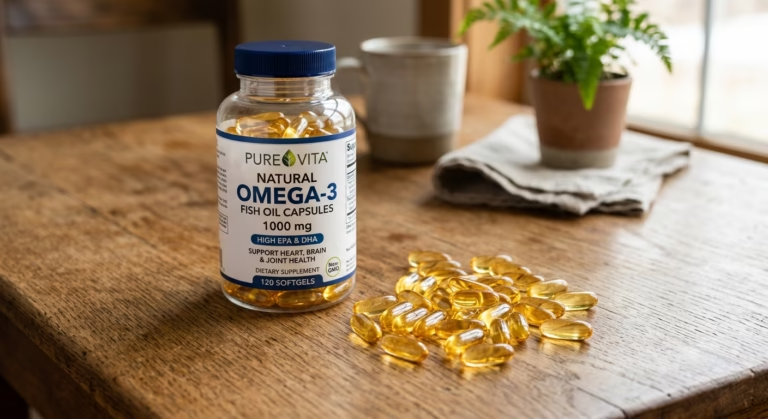

You have probably heard the same advice again and again: eat more fish, take fish oil, protect your heart, support your brain, and reduce inflammation.
But there is a problem.
Some claims about omega 3 are well supported. Others are much less certain.
Omega-3 fatty acids are essential polyunsaturated fats involved in cell membranes and many biological processes. The three forms most relevant to human nutrition are ALA (alpha-linolenic acid), EPA (eicosapentaenoic acid), and DHA (docosahexaenoic acid).
ALA is mainly found in plant foods such as flaxseeds, chia seeds, walnuts, soybean oil, and canola oil. EPA and DHA are found mainly in fatty fish and seafood, while algae can provide DHA and, in some products, EPA.
The body can convert ALA into EPA and DHA, but the conversion is limited. That is one reason eating foods that directly provide EPA and DHA can be useful.
So what does the science actually show?
Let’s separate the real benefits from the marketing hype.
In This Article
Omega 3: What Exactly Is It?
Omega 3 is not a single substance. It is a family of fatty acids that includes several different compounds.
The three most important forms are:
ALA:
Found primarily in plant foods, including flaxseeds, chia seeds, walnuts and certain vegetable oils.
EPA:
Found mainly in oily fish and seafood. EPA has been extensively studied for cardiovascular health and its role in inflammation.
DHA:
Also found mainly in fatty fish and seafood. DHA is particularly important in the structure of cell membranes, including those in the brain and eyes.
The distinction matters because 1 gram of ALA is not biologically equivalent to 1 gram of EPA or DHA.
Your body can convert ALA into longer-chain omega-3 fats, but that process is relatively inefficient.
Omega 3 Has Become a Health Marketing Shortcut
Walk into a pharmacy or browse online and you will find omega 3 supplements promoted for everything from heart protection to brain health.
But taking a capsule doesn’t automatically mean you are preventing disease.
Research has produced mixed results depending on:
- The type of omega-3 used
- The dose
- Whether it comes from food or supplements
- A person’s existing health conditions
- Their baseline triglyceride levels
- The cardiovascular risk of the person taking it
This is why the question shouldn’t simply be “Does omega-3 work?”
A better question is:
“Which omega-3, at what dose, for which person, and for what health outcome?”
1. Omega 3 May Help Lower High Triglycerides
One of the clearest areas where omega 3 has demonstrated an effect is triglyceride reduction.
Triglycerides are a type of fat circulating in the blood. Very high triglyceride levels can increase the risk of pancreatitis and are also associated with cardiovascular risk.
The American Heart Association recognizes prescription omega 3 fatty-acid therapies as an option for managing elevated triglycerides in appropriate patients.
However, there is an important distinction:
Prescription omega 3 medication is not the same thing as an ordinary fish-oil supplement.
If your triglycerides are high, don’t simply start taking an over-the-counter supplement and assume it is equivalent to medical treatment.
Your doctor should evaluate the cause and determine whether dietary changes, weight management, other medications, or prescription therapy is appropriate.
2. Can Omega 3 Protect Your Heart?
This is where the story becomes more complicated.
Some research has found cardiovascular benefits associated with omega 3 intake, particularly in certain people with cardiovascular disease or elevated triglycerides.
A large 2020 review involving 86 studies and 162,796 participants found that increasing EPA and DHA slightly reduced coronary events and coronary death.
Another analysis involving more than 127,000 participants found that marine omega-3 supplementation was associated with lower risks of myocardial infarction and coronary heart disease outcomes.
But that does not mean everyone should take fish-oil capsules to prevent a heart attack.
Evidence from major trials has produced different results depending on the formulation, dose, and population.
One notable example is purified EPA therapy at a high dose in selected patients with elevated triglycerides and cardiovascular risk. This should not be confused with standard over-the-counter fish oil.
The takeaway?
Omega-3 can play a role in cardiovascular health, but “take fish oil and prevent heart disease” is far too simplistic.
3. What About Blood Pressure?
Omega-3 has also been investigated for its possible effects on blood pressure.
Some studies suggest that higher intakes of EPA and DHA may produce modest reductions in blood pressure, potentially through effects on blood vessels and vascular function.
But this does not make omega 3 a replacement for proven hypertension treatments.
If you have high blood pressure, the fundamentals still matter:
- Reduce excess sodium
- Eat more vegetables and fruits
- Maintain a healthy weight
- Exercise regularly
- Limit alcohol
- Don’t smoke
- Take prescribed medication when needed
Think of omega 3 as one piece of the overall dietary picture, not a magic blood-pressure treatment.

4. Does Omega 3 Reduce Inflammation?
This is another area where the popular claim contains some truth—but needs context.
Omega-3 fatty acids participate in biological pathways involved in inflammation and may influence inflammatory markers.
Research has found effects on certain markers, including C-reactive protein and interleukin-6, although results are not uniform across all populations and conditions.
That doesn’t mean taking an omega 3 capsule will “flush inflammation” from your body.
Chronic inflammation is influenced by many factors, including:
- Excess body fat
- Smoking
- Poor sleep
- Physical inactivity
- Diet
- Chronic disease
- Infections and other medical conditions
A single nutrient cannot cancel out an unhealthy lifestyle.
5. Can Omega 3 Improve Brain Health?
This is one of the biggest claims surrounding omega-3—and one of the areas where people should be cautious.
DHA is an important structural component of brain cell membranes, so researchers have strong biological reasons to investigate its relationship with cognition.
However, biological importance does not automatically mean that taking supplements prevents dementia.
A large systematic review and meta-analysis of randomized trials involving nearly 50,000 participants found that long-chain omega-3 supplementation probably has little or no effect on preventing new cognitive impairment or neurocognitive illness.
The NCCIH also notes that observational research has linked seafood consumption with cognitive health, but evidence for supplements preventing Alzheimer’s disease or cognitive decline remains uncertain.
In simple terms:
Eating a healthy diet that includes seafood may be good for overall health, but omega-3 supplements should not be marketed as a guaranteed dementia-prevention strategy.
6. Can Omega 3 Help Depression?
Research into omega-3 and depression is ongoing.
Some studies have suggested that EPA-containing preparations may have beneficial effects for certain people with depression, while DHA alone has shown less consistent effects.
A review involving more than 2,000 participants reported potential benefits from EPA in depression, but the evidence does not mean omega-3 should replace established depression treatments.
If someone is experiencing persistent depression, suicidal thoughts, severe anxiety, or major changes in mood, professional assessment is much more important than simply starting a supplement.
7. Can Omega 3 Prevent Diabetes?
This is where the hype needs to stop.
Current evidence does not support using omega-3 supplementation to prevent or treat type 2 diabetes.
Research has not shown consistent improvements in important markers such as fasting blood glucose, insulin resistance, or HbA1c simply from increasing omega-3 intake.
That doesn’t make omega-3 an unhealthy fat.
It simply means that a healthy nutrient is not automatically a treatment for every disease.
8. Can Omega-3 Prevent Cancer?
There is ongoing research into omega-3 and cancer, but the evidence does not support telling people that omega-3 supplements prevent cancer.
The NIH’s current professional fact sheet notes that observational studies have not shown a consistent relationship between omega-3 intake and overall cancer risk, while a large clinical trial found that long-chain omega-3 supplementation did not reduce overall cancer risk or breast, prostate, or colorectal cancer risk.
Some studies are also investigating whether omega-3 may help certain cancer patients maintain body weight or reduce muscle loss during treatment.
That is different from saying omega-3 prevents cancer.
9. What Foods Are Actually Rich in Omega-3?
Before reaching for a supplement, look at your diet.
Good sources include:
Fatty fish
- Salmon
- Sardines
- Mackerel
- Herring
Plant sources of ALA
- Flaxseeds
- Chia seeds
- Walnuts
- Soybeans
- Canola oil
Other sources
- Algae-based products
- Fish oil
- Algal oil supplements
Fish and seafood provide EPA and DHA directly, whereas plant foods primarily provide ALA.
For people who don’t eat fish, algae-based omega 3 products can be a vegetarian or vegan source of DHA, with some products also providing EPA.
10. Should You Take an Omega-3 Supplement?
Not necessarily.
If you regularly eat fatty fish and have a balanced diet, you may not need a supplement.
Supplements may be considered in certain circumstances, but the decision should depend on your diet, health status, medications, triglyceride levels, and overall cardiovascular risk.
And remember:
More omega-3 is not automatically better.
High doses can have adverse effects and should not be taken casually, particularly when someone is using medications that affect blood clotting or has other medical conditions.
If you are considering a high-dose supplement, speak with your doctor first.

The Bottom Line: Don’t Believe Every Omega 3 Claim You See
Omega-3 is an important family of essential fats with legitimate roles in human health.
There is good evidence that certain omega-3 therapies can substantially reduce triglycerides, and research suggests potential cardiovascular benefits in specific groups. Omega-3-rich foods, particularly seafood, can also form part of a healthy dietary pattern.
But the evidence becomes much less convincing when omega-3 supplements are promoted as a cure-all.
They are not proven to prevent or treat diabetes, and current evidence does not establish them as a reliable way to prevent dementia or cancer.
The smartest approach is not to fear omega-3—or worship it.
Eat a balanced diet, include appropriate sources of healthy fats, choose seafood when suitable, and use supplements for a specific reason rather than because a bottle promises better health.
Frequently Asked Questions
What is omega 3?
Omega 3 refers to a family of polyunsaturated fatty acids. The major forms include ALA, EPA, and DHA. ALA is mainly found in plants, while EPA and DHA are abundant in fatty fish and seafood.
What are the main omega-3 benefits?
Potential benefits include helping lower triglycerides and supporting normal cellular functions. Evidence for cardiovascular benefits is strongest in certain higher-risk groups and with specific prescription formulations. Evidence for other claims, such as dementia prevention, is less certain.
Which foods contain omega-3?
Fatty fish such as salmon, sardines, mackerel, and herring are rich sources of EPA and DHA. Flaxseeds, chia seeds, walnuts, and certain plant oils provide ALA.
Is fish oil the same as omega-3?
Fish oil is a source of omega 3 fatty acids, particularly EPA and DHA. However, different fish-oil products contain different amounts and forms of these fatty acids, so one supplement cannot automatically be considered equivalent to another.
Does omega-3 lower cholesterol?
Omega-3 can significantly lower triglycerides, particularly at therapeutic doses. Its effects on LDL cholesterol can vary depending on the formulation and individual. It should not be viewed simply as an LDL-lowering treatment.
Can omega-3 lower blood pressure?
Some research suggests that EPA and DHA may modestly reduce blood pressure, but omega-3 supplements should not replace prescribed hypertension treatment or lifestyle changes.
Can omega-3 prevent heart attacks?
Not for everyone. Some cardiovascular benefits have been demonstrated in specific populations and with specific high-dose prescription therapies, while trials of ordinary supplements have produced mixed results.
Does omega-3 prevent dementia?
Current evidence does not establish omega-3 supplements as a reliable way to prevent dementia or cognitive decline. Large randomized-trial evidence has found little or no effect on new cognitive impairment.
Can omega-3 prevent diabetes?
No. Current evidence does not support omega-3 supplements as a way to prevent or treat type 2 diabetes.
Is omega-3 good for inflammation?
Omega-3 fatty acids can influence inflammatory pathways and may reduce certain inflammatory markers. However, they should be considered part of an overall healthy lifestyle rather than a stand-alone treatment for chronic inflammation.
Should everyone take omega-3 supplements?
No. Many people can obtain omega-3 through food. Whether supplementation is appropriate depends on individual diet, health conditions, triglyceride levels, medications, and medical advice.
Sources
- NIH Office of Dietary Supplements – Omega-3 Fatty Acids Fact Sheet for Health Professionals
NIH Office of Dietary Supplements - NCCIH – Omega-3 Supplements: What You Need to Know
National Center for Complementary and Integrative Health - American Heart Association – Omega-3 Fatty Acids for Management of Hypertriglyceridemia
American Heart Association - PubMed – Omega-3, Omega-6 and Polyunsaturated Fat for Cognition: Systematic Review and Meta-analysis
PubMed research review
Medical Disclaimer
This article is intended for educational purposes and should not replace individualized medical advice. People with high triglycerides, cardiovascular disease, diabetes, bleeding disorders, or those taking prescription medicines should discuss omega-3 supplementation with a qualified healthcare professional before starting high-dose products.
We have a very strict reviewing guidelines on how to run every article in the website. Everything we write follow a very strict reviewing process by following high quality peer-reviewed studies. Every source we follow are credible and accurate and again reviewed by our doctors to give you all high quality advise and content.
For the latest health trending topics and top of the line updated health and fitness related news and conditions with insights from board certified experienced health professionals, follow Healing Doctor on Facebook, Instagram and Whatsapp.