

Medically reviewed by Dr Itender Pal Singh
You may feel completely normal, go about your day, eat your usual meals and never suspect anything is wrong.
Then a routine blood pressure check reveals a reading that is higher than it should be.
That is one of the biggest problems with Hypertension.
High blood pressure often produces no obvious symptoms, yet over time it can damage the heart, brain, kidneys and blood vessels. The World Health Organization estimates that about 1.4 billion adults aged 30–79 had Hypertension worldwide in 2024, and around 44% were unaware they had the condition.
The good news is that blood pressure can often be improved with a combination of lifestyle changes, monitoring and, when necessary, medication.
And there is an important nutritional point that deserves more attention:
Reducing sodium matters—but getting enough potassium may matter too.
Recent evidence has strengthened the argument that the balance between sodium and potassium may be more useful for cardiovascular health than focusing on sodium alone.
So what does this mean for someone trying to control Hypertension?
Let’s break it down.
In This Article
What Exactly Is Hypertension?
Hypertension is persistently elevated blood pressure in the arteries.
Blood pressure is recorded using two numbers:
- Systolic pressure: the pressure when your heart contracts.
- Diastolic pressure: the pressure when your heart relaxes between beats.
The 2025 American Heart Association/American College of Cardiology guideline classifies:
| Blood pressure category | Systolic | Diastolic |
|---|---|---|
| Normal | <120 mmHg | <80 mmHg |
| Elevated | 120–129 mmHg | <80 mmHg |
| Stage 1 Hypertension | 130–139 mmHg | 80–89 mmHg |
| Stage 2 Hypertension | ≥140 mmHg | ≥90 mmHg |
The CDC similarly defines high blood pressure as consistently at or above 130/80 mmHg.
However, blood pressure classification can vary between guidelines and countries, so your healthcare professional should interpret your readings in context.
One high reading does not necessarily mean you have chronic Hypertension. Blood pressure naturally changes throughout the day, which is why repeated measurements are important.
Why Is Hypertension So Dangerous If You Feel Fine?
This is where the problem becomes serious.
Many people with Hypertension have no symptoms. There may be no headache, no dizziness and no obvious warning that blood pressure is gradually damaging the cardiovascular system.
Meanwhile, persistently elevated pressure can place extra stress on artery walls and the organs supplied by those arteries.
Uncontrolled Hypertension increases the risk of:
- Heart disease
- Heart attack
- Stroke
- Heart failure
- Chronic kidney disease
- Blood vessel damage
- Vision problems
The CDC identifies high blood pressure as an important risk factor for heart disease and stroke.
This is why waiting for symptoms is a poor strategy.
The simplest way to know your blood pressure is to measure it.
The Salt Problem: Are You Eating More Sodium Than You Realize?
If you’ve been told to control your blood pressure, you’ve probably heard the same advice:
“Cut down on salt.”
And there is a good reason for that.
Excess sodium can contribute to fluid retention and increased blood pressure in many people. The problem is that sodium isn’t found only in the salt shaker.
It can hide in:
- Packaged snacks
- Instant noodles
- Processed meats
- Pickles
- Sauces
- Restaurant meals
- Canned foods
- Frozen foods
- Packaged breads
- Ready-to-eat meals
The American Heart Association recommends no more than 2,300 mg of sodium per day, with an ideal target of about 1,500 mg for most adults, particularly people with high blood pressure.
That does not mean you should eliminate sodium completely.
Your body needs sodium for normal nerve and muscle function. The goal is to avoid excessive intake.
But Here’s the Part Many People Miss: Potassium
Now comes the other side of the equation.
Potassium can help counter some of sodium’s effects on blood pressure.
The mineral is involved in fluid balance and can help the body excrete more sodium. Potassium also supports relaxation of blood vessel walls.
This is why researchers have become increasingly interested in the sodium-to-potassium ratio rather than looking at sodium in isolation.
A meta-analysis of randomized controlled trials found that increasing potassium intake was associated with lower blood pressure. In people with Hypertension, the reduction was particularly notable, although the exact response varies among individuals.
The recent Medical News Today report highlighted a 2025 meta-analysis suggesting that adding approximately 2,000 mg of potassium per day could reduce systolic blood pressure by around 5 mmHg and diastolic pressure by about 3 mmHg in people with Hypertension.
That does not mean everyone should immediately take potassium supplements.
In fact, that could be dangerous for some people.
The Better Strategy May Be: Less Sodium + More Potassium
Think of blood pressure nutrition as a balance rather than a single food rule.
Instead of simply asking:
“How can I eat less salt?”
also ask:
“How can I eat more potassium-rich whole foods?”
The 2025 AHA/ACC guideline recommends lifestyle measures including reducing sodium, increasing dietary potassium, following a heart-healthy eating pattern, maintaining a healthy weight, exercising, managing stress and reducing alcohol intake.
That creates a more complete approach to Hypertension management.
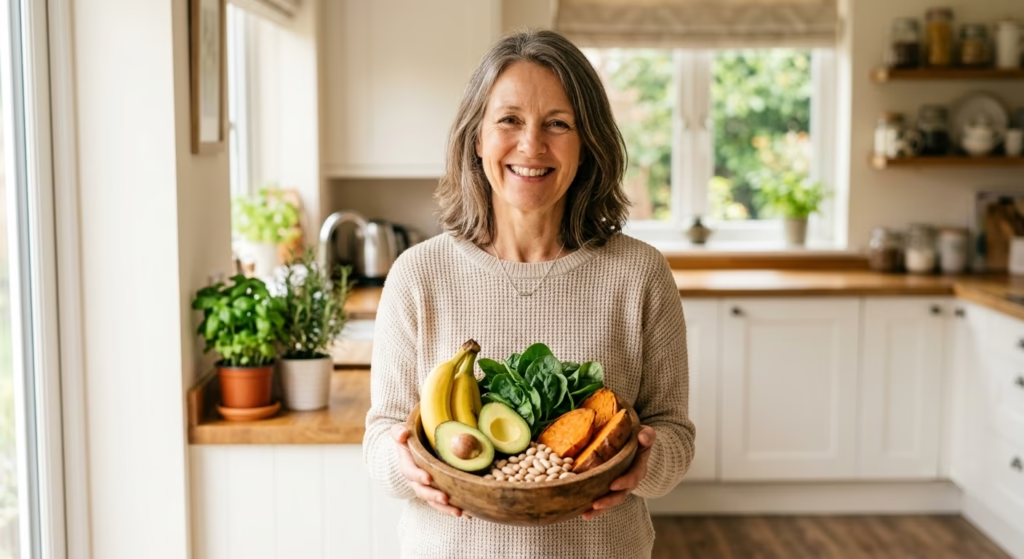
8 Potassium-Rich Foods That Can Fit Into a Heart-Healthy Diet
You don’t necessarily need exotic foods or expensive supplements.
Many ordinary foods provide potassium.
1. Potatoes
A medium baked potato with the skin can provide a substantial amount of potassium. The Medical News Today report cited approximately 919 mg for one medium baked potato.
The preparation matters. A baked potato is very different nutritionally from a heavily salted, deep-fried potato product.
2. Spinach
Cooked spinach is another potassium-rich choice. About half a cup of cooked spinach provides roughly 591 mg of potassium, according to the food values cited in the report.
3. Beans
Beans and other legumes can provide potassium along with fiber and plant-based protein.
Try adding beans or lentils to soups, salads, curries or grain-based meals.
4. Lentils
Lentils can be an especially practical choice because they provide potassium, fiber and protein without requiring complicated preparation.
5. Plain Yogurt
Plain yogurt provides potassium along with protein and calcium.
Choose versions without excessive added sugar.
6. Salmon
Fish such as salmon can contribute potassium while also providing protein and beneficial unsaturated fats.
7. Bananas
Bananas are popular for a reason: they’re convenient, affordable and provide potassium.
But they’re not the only potassium-rich food—and they don’t have to be the centerpiece of a blood-pressure diet.
8. Cantaloupe
Cantaloupe also provides potassium and can be incorporated into a balanced breakfast or snack.
Don’t Make This Mistake With Potassium
Here’s an important warning:
More potassium is not automatically better for everyone.
People with certain kidney problems, high blood potassium levels or other medical conditions may need to limit potassium.
Some medications can also increase potassium levels.
Dr Itender Pal Singh also highlighted concerns for people with chronic kidney disease, heart failure, hyperkalemia and those taking certain medications such as ACE inhibitors.
Therefore:
Do not start potassium supplements simply because you read that potassium can lower blood pressure.
Food-based changes may be appropriate for many people, but your doctor or dietitian should determine whether increasing potassium is safe for you.
What Is the DASH Diet and Why Does It Help?
If you’re looking for a structured eating pattern for Hypertension, the DASH diet is one of the best-known approaches.
DASH stands for Dietary Approaches to Stop Hypertension.
It emphasizes foods such as:
- Fruits
- Vegetables
- Whole grains
- Beans and legumes
- Nuts and seeds
- Low-fat dairy
- Fish
- Poultry
It also limits foods high in sodium, saturated fat and added sugars.
The American Heart Association notes that DASH can help lower blood pressure as part of an overall heart-healthy eating pattern.
The important point is that DASH isn’t simply about removing salt.
It’s about improving the overall quality of your diet.
7 Lifestyle Changes That Can Make Hypertension Easier to Control
Diet is important, but it is only one part of the picture.
1. Maintain a Healthy Weight
Excess body weight can increase the workload on the cardiovascular system.
If you’re overweight, even gradual weight loss can be beneficial for blood pressure.
2. Move More
Regular physical activity can help lower blood pressure and improve cardiovascular fitness.
The WHO recommends at least 150 minutes of moderate-intensity aerobic activity per week, or 75 minutes of vigorous activity, along with muscle-strengthening activities on at least two days each week.
Walking, cycling, swimming and other activities can count.
3. Reduce Excess Sodium
Check food labels instead of relying only on the salt shaker.
Processed foods can contribute significant amounts of sodium.
4. Eat More Fruits and Vegetables
This naturally increases intake of potassium, fiber and other nutrients.
5. Limit Alcohol
Excessive alcohol consumption can contribute to elevated blood pressure.
Reducing alcohol can be part of a broader Hypertension management strategy.
6. Don’t Smoke
Smoking damages blood vessels and increases cardiovascular risk.
Stopping smoking is one of the most important things you can do for overall cardiovascular health.
7. Take Prescribed Medication Correctly
This point is easy to overlook.
Diet and exercise can be powerful tools, but they do not replace prescribed medication for everyone.
The 2025 AHA/ACC guideline recommends medication for adults with average blood pressure of 140/90 mmHg or higher, as well as selected adults with readings of 130/80 mmHg or higher depending on cardiovascular disease, stroke, diabetes, kidney disease or overall cardiovascular risk.
Never stop blood-pressure medication because your readings improve without discussing it with your healthcare professional.
How Quickly Can Potassium and Sodium Changes Lower Blood Pressure?
Don’t expect your blood pressure to transform overnight.
Responses differ between individuals.
Factors such as age, genetics, medications, kidney function, baseline diet and overall health can affect how quickly blood pressure responds.
The Medical News Today article notes that sodium reduction may produce relatively early changes, while the effect of increased potassium may develop over a longer period.
That’s why monitoring your blood pressure over time is more useful than judging your progress based on a single reading.
A Simple Day of Eating for Better Blood Pressure
Here’s an example of how these principles could look in everyday life.
Breakfast:
Oats with plain yogurt, banana and a small portion of unsalted nuts.
Lunch:
Dal or beans, vegetables, whole-grain roti or brown rice, and a side salad.
Snack:
Fruit or plain yogurt.
Dinner:
Grilled fish, lentils or another lean protein with cooked vegetables and a whole grain.
Drinks:
Water and unsweetened beverages.
The objective isn’t perfection.
The objective is to build a pattern that is naturally higher in potassium-rich foods and lower in excess sodium.
What About Potassium Supplements?
For most people, the first choice should be food rather than supplements, unless a healthcare professional recommends otherwise.
Supplements can provide concentrated amounts of potassium, which may be unsafe for people whose kidneys cannot remove potassium effectively or for people taking medications that raise potassium levels.
So don’t treat potassium like a harmless vitamin.
If you have kidney disease, heart failure, abnormal potassium levels or take blood-pressure medicines, ask your healthcare professional before deliberately increasing potassium intake or using potassium supplements.
When Is High Blood Pressure an Emergency?
Most Hypertension does not cause obvious symptoms.
However, extremely high blood pressure can become a medical emergency, especially when accompanied by symptoms suggesting organ damage.
The WHO notes that very high blood pressure—usually around 180/120 mmHg or higher—may be associated with symptoms such as severe headache, chest pain, difficulty breathing, confusion, vision changes, nausea or vomiting.
If you have an extremely high reading, especially with concerning symptoms, seek urgent medical attention rather than trying to correct the number yourself with food or home remedies.
The Bottom Line: Don’t Focus on Salt Alone
The latest evidence does not mean that sodium is suddenly unimportant.
It means the conversation around Hypertension and nutrition is becoming more complete.
Reduce excessive sodium.
Choose potassium-rich whole foods when they are safe for you.
Follow a heart-healthy eating pattern such as DASH.
Maintain a healthy weight.
Monitor your blood pressure.
Take prescribed medication when recommended.
And most importantly, don’t assume that feeling fine means your blood pressure is fine.
Hypertension can develop quietly for years. A simple blood pressure check can reveal a problem before complications occur.
The goal isn’t simply to chase a lower number.
The goal is to protect your heart, brain, kidneys and blood vessels for the long term.
Frequently Asked Questions About Hypertension
1. What is Hypertension?
Hypertension is persistently elevated blood pressure in the arteries. Current U.S. guidelines classify stage 1 Hypertension as systolic blood pressure of 130–139 mmHg or diastolic blood pressure of 80–89 mmHg.
2. Can Hypertension have no symptoms?
Yes. Many people have no noticeable symptoms, which is why regular blood pressure measurement is important.
3. Does reducing salt lower blood pressure?
Reducing excessive sodium intake can help lower blood pressure, particularly in people who are salt-sensitive. It is an important part of lifestyle management.
4. Can potassium help lower blood pressure?
Yes. Research indicates that increasing potassium intake can lower blood pressure in many people, and the effect may be greater in people with Hypertension.
5. What foods are high in potassium?
Potassium-rich foods include potatoes, spinach, beans, lentils, yogurt, fish, bananas and other fruits and vegetables.
6. Should everyone with Hypertension take potassium supplements?
No. People with kidney disease, hyperkalemia, heart failure or certain medication regimens may need to restrict potassium. Speak with a healthcare professional before using potassium supplements.
7. What is the DASH diet?
DASH stands for Dietary Approaches to Stop Hypertension. It emphasizes vegetables, fruits, whole grains, legumes, nuts, low-fat dairy and other heart-healthy foods while limiting sodium and unhealthy fats.
8. Can exercise help Hypertension?
Yes. Regular physical activity can help lower blood pressure and improve cardiovascular health. Adults are generally advised to get at least 150 minutes of moderate-intensity aerobic activity each week.
9. Can Hypertension be cured permanently?
Hypertension can often be controlled effectively, but many people require long-term lifestyle changes and medication. Do not stop treatment without medical advice.
10. What blood pressure is considered dangerously high?
A reading around 180/120 mmHg or higher is considered severely elevated. If it occurs with symptoms such as chest pain, breathing difficulty, confusion, severe headache or vision changes, seek urgent medical care.
Final Takeaway
The next time you hear that managing Hypertension is simply about “cutting salt,” remember that the bigger picture matters.
A heart-healthy diet should reduce excessive sodium while providing adequate potassium-rich whole foods when medically appropriate.
That combination, together with physical activity, healthy weight management, regular monitoring and prescribed treatment, can provide a much stronger strategy for controlling blood pressure than relying on one dietary change alone.
Your blood pressure number is not just a number. It is a signal about the pressure your cardiovascular system is dealing with every day.
Listen to it early—and act before complications have a chance to develop.
Medical disclaimer: This article is for educational purposes and does not replace individualized medical advice. People with kidney disease, heart failure, abnormal potassium levels or those taking medications that affect potassium should consult a qualified healthcare professional before changing potassium intake or using supplements.
Sources
- World Health Organization (WHO) – Hypertension
https://www.who.int/news-room/fact-sheets/detail/hypertension - World Health Organization (WHO) – Healthy Diet
https://www.who.int/en/news-room/fact-sheets/detail/healthy-diet - World Health Organization (WHO) – Hypertension: High Blood Pressure Prevention
https://www.who.int/health-topics/hypertension/high-blood-pressure—prevent-it - American Heart Association (AHA) – 2025 High Blood Pressure Guideline
https://professional.heart.org/en/science-news/2025-high-blood-pressure-guideline - American Heart Association (AHA) – Top Things to Know: 2025 High Blood Pressure Guideline
https://professional.heart.org/en/science-news/2025-high-blood-pressure-guideline/top-things-to-know - American Heart Association / American College of Cardiology – 2025 Guideline for the Prevention, Detection, Evaluation and Management of High Blood Pressure in Adults
https://www.ahajournals.org/doi/10.1161/CIR.0000000000001356 - PubMed – Effects of Oral Potassium on Blood Pressure: Meta-analysis of Randomized Controlled Clinical Trials
https://pubmed.ncbi.nlm.nih.gov/9168293/ - PubMed Central – Potassium Intake and Blood Pressure: A Dose-Response Meta-Analysis of Randomized Controlled Trials
https://pmc.ncbi.nlm.nih.gov/articles/PMC7429027/ - PubMed Central – Effect of Changes in Potassium Intake on Blood Pressure: Dose-Response Meta-analysis of Randomized Clinical Trials
https://pmc.ncbi.nlm.nih.gov/articles/PMC12223369/
We have a very strict reviewing guidelines on how to run every article in the website. Everything we write follow a very strict reviewing process by following high quality peer-reviewed studies. Every source we follow are credible and accurate and again reviewed by our doctors to give you all high quality advise and content.
For the latest health trending topics and top of the line updated health and fitness related news and conditions with insights from board certified experienced health professionals, follow Healing Doctor on Facebook, Instagram and Whatsapp.