

Many people spend hours counting calories, reading nutrition labels, and avoiding foods they love in the name of healthy eating. Yet despite these efforts, they often feel frustrated, guilty around food, or constantly crave something more.
The missing ingredient may not be another vitamin or superfood.
It could simply be the pleasure of eating.
Health experts increasingly recognize that enjoying your meals isn’t just about satisfying your taste buds—it also influences digestion, mental well-being, food choices, and long-term health.
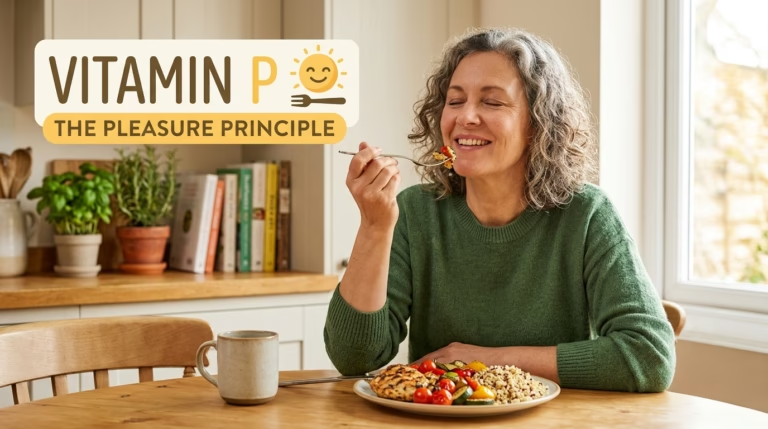
Some nutrition professionals even refer to this concept as “Vitamin P”—the pleasure factor in eating.
Let’s explore why making room for enjoyment at the dining table may actually help you become healthier.
In This Article :-
Why Does Food Taste So Good? Your Brain Is Designed That Way
Humans are naturally programmed to enjoy food.
When you eat something satisfying, your brain releases dopamine, a neurotransmitter linked with reward, motivation, learning, and pleasure. This chemical response encourages us to seek nourishing foods and repeat behaviors that support survival.
Dietitian and therapist Aleta Storch, RDN, explains that enjoyable eating activates the brain’s reward system, helping people feel relaxed and satisfied.
That relaxed state does more than improve mood.
It also prepares the body for efficient digestion.
The Problem: Rushing Through Meals May Be Affecting Your Health
Modern lifestyles have changed how people eat.
Many individuals:
- Eat while working.
- Scroll through their phones during meals.
- Feel guilty about eating favorite foods.
- Focus only on calories instead of satisfaction.
When eating becomes stressful, the body’s “fight or flight” response may remain active, making digestion less efficient.
Over time, this can affect both physical and emotional well-being.
The Science: Enjoying Food Can Improve Digestion
Your digestive system functions best when your body is relaxed.
Pleasurable meals activate the parasympathetic nervous system, often called the “rest and digest” mode. In this state, the body can better digest food and absorb nutrients.
Instead of viewing food as something to fear or control, enjoying meals may actually help your body use nutrients more effectively.
Can Eating for Pleasure Lead to Healthier Food Choices? Research Says Yes
Enjoying food doesn’t automatically mean eating unhealthy meals.
In fact, scientific evidence suggests the opposite.
A 2020 systematic review analyzing 119 scientific studies found that 57% of the research showed a positive relationship between eating pleasure and healthier dietary habits.
Researchers concluded that people who genuinely enjoy their meals are often more likely to maintain balanced eating patterns.
Similarly, a 2015 study found that individuals who experienced greater pleasure from eating tended to have better nutritional status.
Nutrition counselor Sarah Gold Anzlovar, MS, RDN, notes that when people truly enjoy healthy foods, they often feel more satisfied, reducing the urge to overeat or binge later. That’s why it’s important “Vitamin P”—the pleasure factor in eating.
Case Study: What Research Reveals About Food Enjoyment
A large scientific review published in 2020 examined 119 studies exploring the connection between eating pleasure “Vitamin P” and health.
Key Findings:
- 57% of studies found positive links between food enjoyment and healthier eating habits.
- Greater meal satisfaction was associated with improved diet quality.
- Enjoying food encouraged more mindful eating behaviors.
- People who felt satisfied were less likely to experience uncontrolled overeating.
These findings suggest that pleasure and nutrition can work together instead of competing against each other.
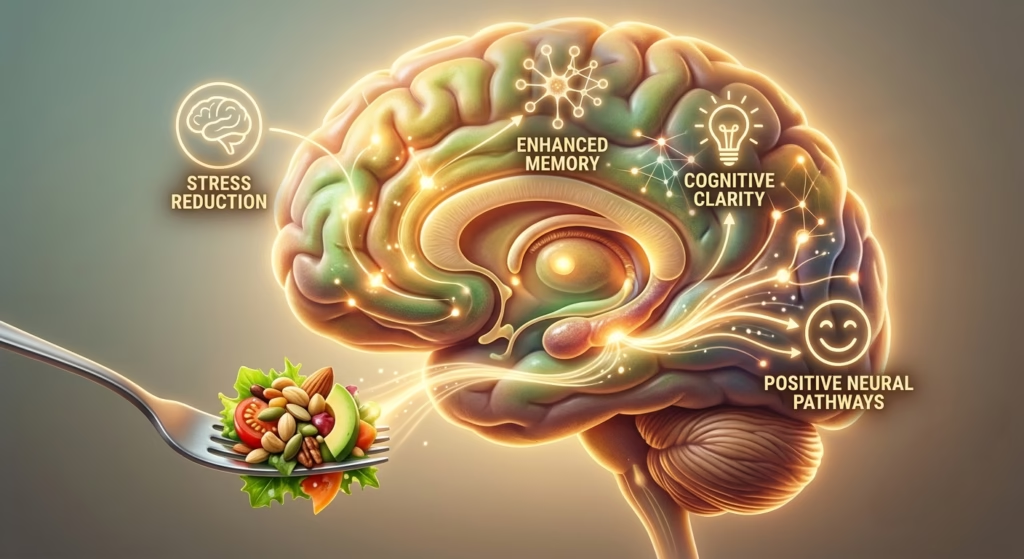
Food Doesn’t Only Feed Your Body—It Also Feeds Your Mind
Food carries memories, traditions, celebrations, and comfort.
Think about:
- Your mother’s home-cooked meal.
- Festival dishes shared with relatives.
- Soup prepared when you were sick.
- A dessert connected to childhood memories.
These experiences nourish emotional well-being alongside physical health.
Sharing Meals Strengthens Relationships
Eating together has long been part of human culture.
Research involving Thai communities found that sharing enjoyable meals with family and friends was associated with greater happiness and stronger social connections.
Whether it’s a weekend dinner or a festival feast, meals often become moments of bonding.
Comfort Foods Aren’t Always the Enemy
Many people believe any food eaten for comfort is unhealthy.
The reality is more balanced.
There’s an important difference between mindfully enjoying comfort food “Vitamin P” and using food to escape difficult emotions.
Having your favorite meal after a stressful day isn’t necessarily harmful when you’re aware of why you’re eating and can genuinely enjoy the experience without guilt.
Breaking Free from Diet Culture
For years, many diets have labeled foods as “good” or “bad.”
This rigid thinking can create guilt, anxiety, and an unhealthy relationship with eating.
Experts suggest that allowing yourself to occasionally enjoy foods you love can reduce feelings of restriction.
When people stop fearing certain foods, they often experience:
- Less guilt around eating.
- Better self-control.
- Greater confidence in food choices.
- More balanced eating habits over time.
Food Connects Us to Our Identity
Traditional foods represent more than recipes.
They preserve culture, family history, and shared experiences.
Avoiding cultural foods solely because of diet trends may leave people feeling disconnected from their heritage.
Celebrating traditional meals in moderation allows people to enjoy both nutrition and cultural identity.
Eating for Pleasure “Vitamin P” vs Emotional Eating: What’s the Difference?
These two concepts are often confused.
Eating for Pleasure “Vitamin P”
- You choose food because you genuinely enjoy its flavor, aroma, or texture.
- You eat mindfully.
- You feel satisfied afterward.
- There is little or no guilt.
Emotional Eating
- Food becomes a way to escape stress, sadness, boredom, or anxiety.
- Eating often happens automatically.
- Satisfaction is usually temporary.
- Guilt or regret may follow.
Although the two experiences can overlap, mindful enjoyment generally creates a healthier relationship with food.
Simple Ways to Add More Joy to Every Meal
You don’t need expensive ingredients to make meals more enjoyable.
Try these practical ideas:
- Eat without distractions whenever possible.
- Slow down and notice flavors and textures.
- Add fresh herbs or spices to enjoy “Vitamin P”
- Serve meals on dishes that make eating feel pleasant.
- Share meals with family or friends.
- Include favorite foods in moderation.
- Appreciate cultural recipes and family traditions.
Even small changes can make meals more satisfying.
The Bottom Line
Healthy eating isn’t only about vitamins, protein, fiber, or calories.
The way you experience food also matters.
Scientific research suggests that enjoying your meals may support better digestion, improve satisfaction, encourage healthier eating habits, strengthen social connections, and create a more positive relationship with food.
Rather than asking only, “Is this food healthy?”
You may also want to ask,
“Did I actually enjoy eating it?”
Sometimes, the healthiest meal is one that nourishes both your body and your mind.
Frequently Asked Questions (FAQs)
Is eating for pleasure healthy?
Yes. Research suggests that enjoying food mindfully can improve meal satisfaction, support digestion, and encourage healthier long-term eating habits.
Does enjoying food improve digestion?
Pleasurable eating helps activate the body’s “rest and digest” response, allowing the digestive system to function more efficiently.
What is Vitamin P in nutrition?
“Vitamin P” is an informal term used to describe the importance of pleasure in eating. It is not an actual vitamin but highlights the health benefits of enjoying food.
Is emotional eating the same as eating for pleasure?
No. Eating for pleasure focuses on enjoying food mindfully, while emotional eating usually involves using food to cope with difficult emotions.
Can enjoying healthy food reduce overeating?
Studies suggest that feeling satisfied after meals may lower the likelihood of binge eating or overeating later.
Sources
- Bédard A, Lamarche B, Grégoire LM, et al. Can Eating Pleasure Be a Lever for Healthy Eating? A Systematic Scoping Review of Eating Pleasure and Its Links with Dietary Behaviors and Health. Nutrients. 2020;12(5):1454.
- Bailly N, Maitre I, Van Wymelbeke V, et al. Relationships Between Nutritional Status, Depression and Pleasure of Eating in Aging Men and Women. Archives of Gerontology and Geriatrics. 2015;61(2):330-336.
- Hagerty BMK, Lynch-Sauer J, Patusky KL, Bouwsema M, Collier P. Sense of Belonging: A Vital Mental Health Concept. Archives of Psychiatric Nursing. 1992;6(3):172-177.
- Volkow ND, Wang GJ, Tomasi D, Baler RD. Obesity and Addiction: Neurobiological Overlaps. Obesity Reviews. 2013;14(1):2-18.
- Harvard T.H. Chan School of Public Health. The Nutrition Source: Healthy Eating Plate.
- National Institute of Diabetes and Digestive and Kidney Diseases (NIDDK). Your Digestive System & How It Works.
- Academy of Nutrition and Dietetics. Intuitive Eating and Building a Healthy Relationship with Food.
We have a very strict reviewing guidelines on how to run every article in the website. Everything we write follow a very strict reviewing process by following high quality peer-reviewed studies. Every source we follow are credible and accurate and again reviewed by our doctors to give you all high quality advise and content.
For the latest health trending topics and top of the line updated health and fitness related news and conditions with insights from board certified experienced health professionals, follow Healing Doctor on Facebook, Instagram and Whatsapp.